Alexander Thomson and Janet Ferguson
Alexander Thomson
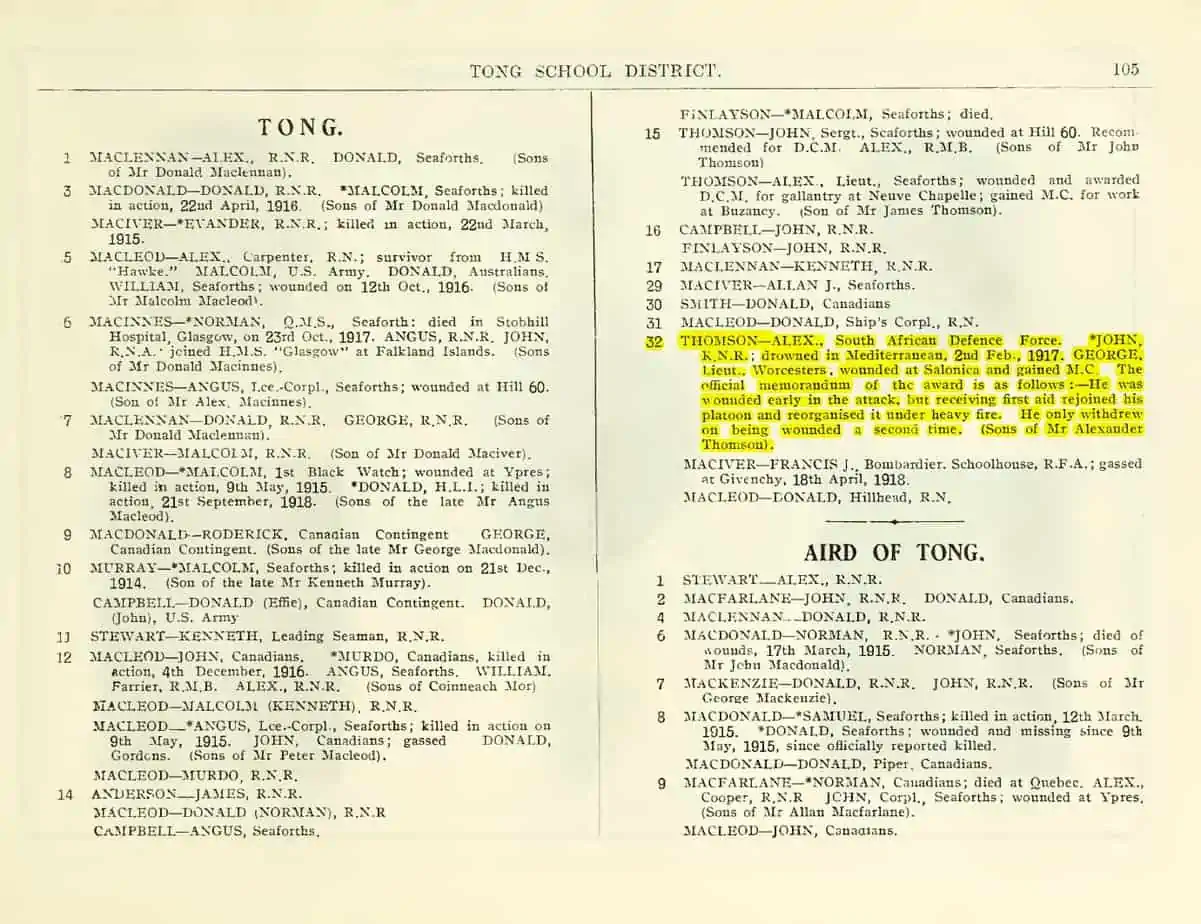
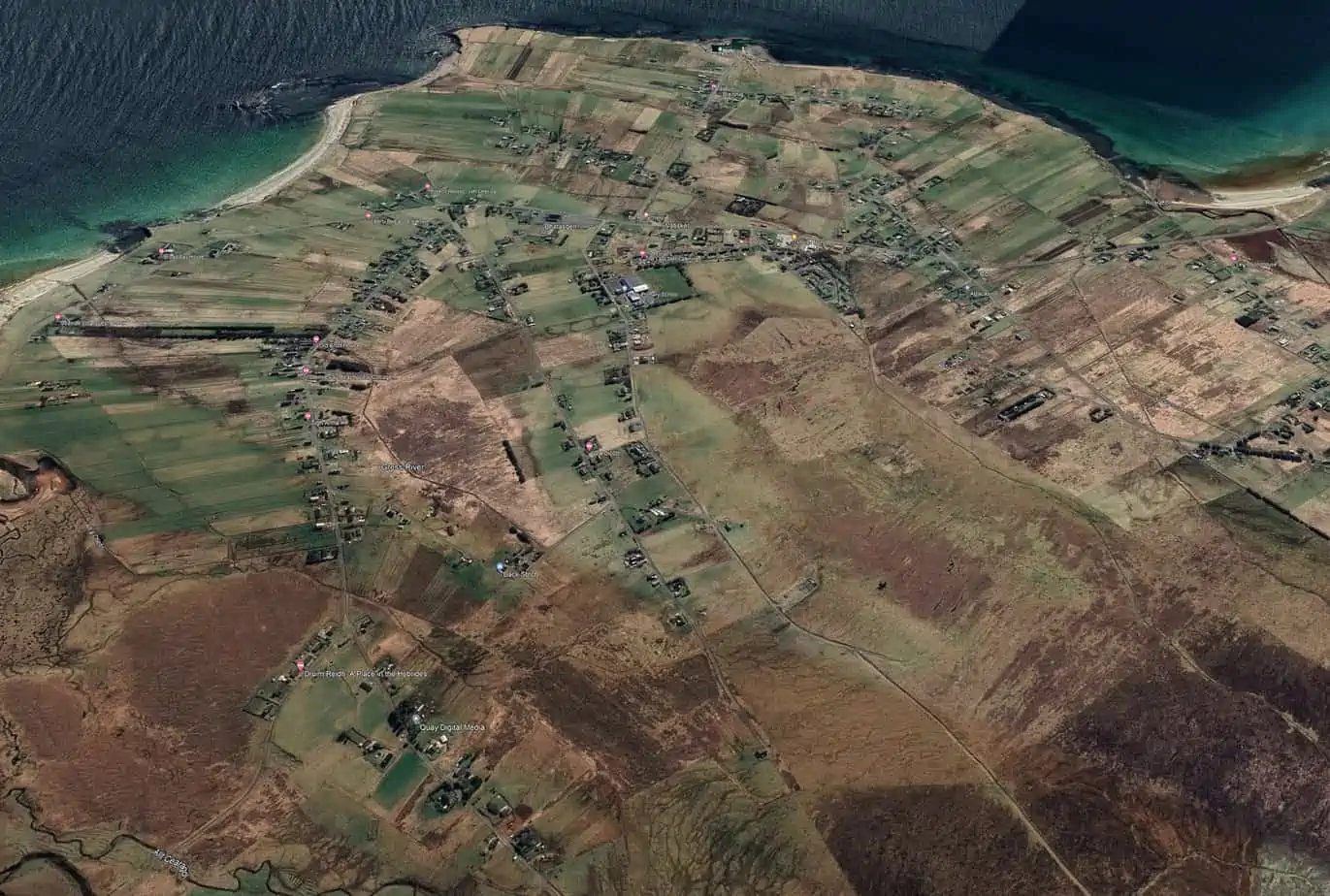
Alexander Thomson was born around 1840 in the small crofting community of Tong on the Isle of Lewis. Life there was shaped by the sea, the land, and the close ties of family. He grew up as the son of Alexander Thomson and Christina MacInnes, in a household that would become the foundation of a long family presence at 32 Aird Tong. In time, three generations of Thomsons would live under that roof, the last being my father, born there in 1910.
Janet “Jessie” Ferguson
Just a few miles away, in Gress, Janet Ferguson—known to everyone as Jessie—was born on 1 November 1842. She was the daughter of Evander Ferguson and Ann Murray. Like Alexander, Jessie grew up in a world where family, work, and faith were deeply intertwined, and where daily life was shaped by the rhythms of the island.
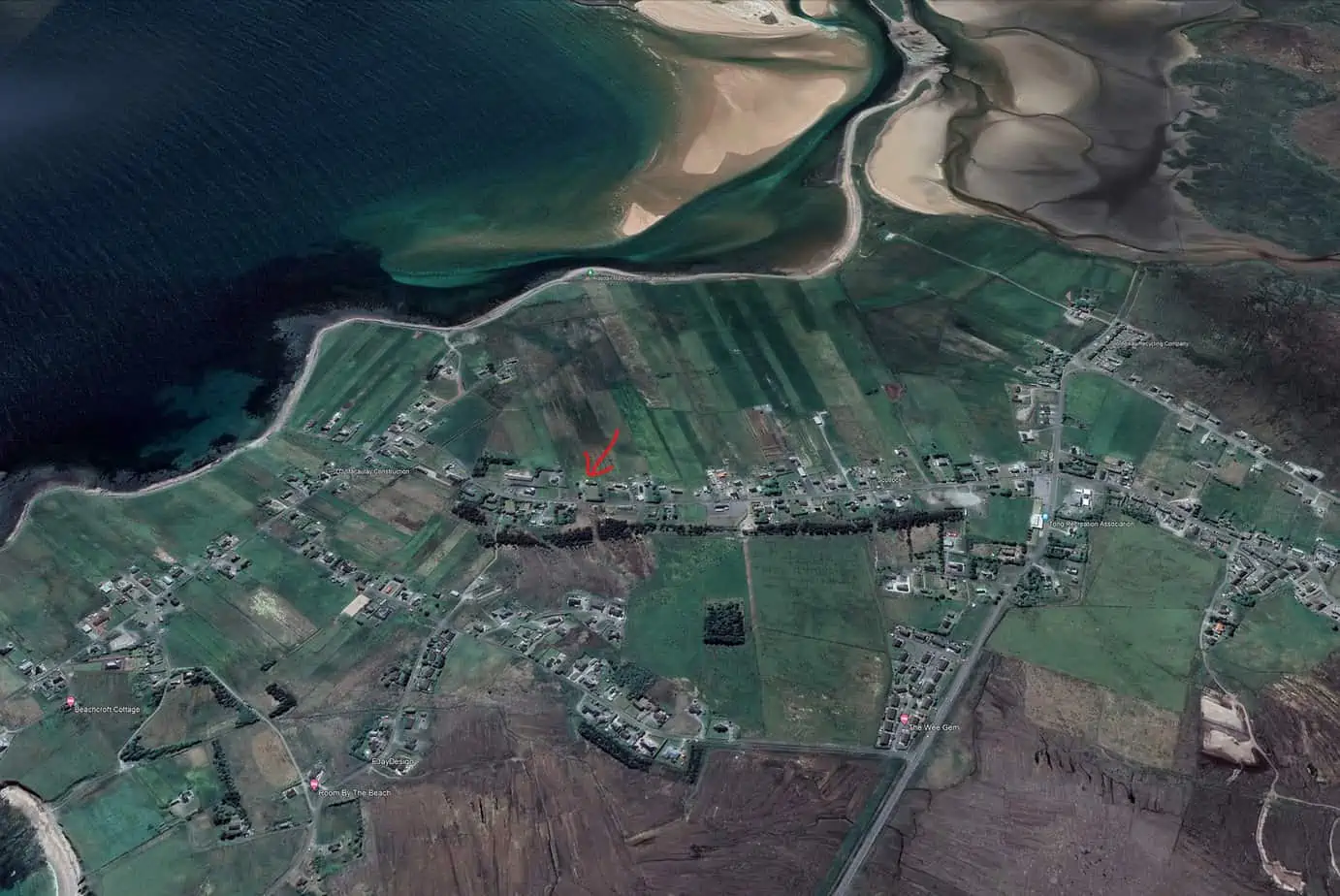
The Isle of Lewis
The Isle of Lewis itself left a strong impression on all who lived there. The southern part rose rugged and mountainous, while the north stretched out in wide, open moorland, scattered with lochs and edged by white sandy beaches. Although the island lay far to the north, the Gulf Stream brought a surprising mildness to the climate. Even so, the Atlantic winds ensured that life was rarely easy bringing not only warmth but also rain and relentless gales.
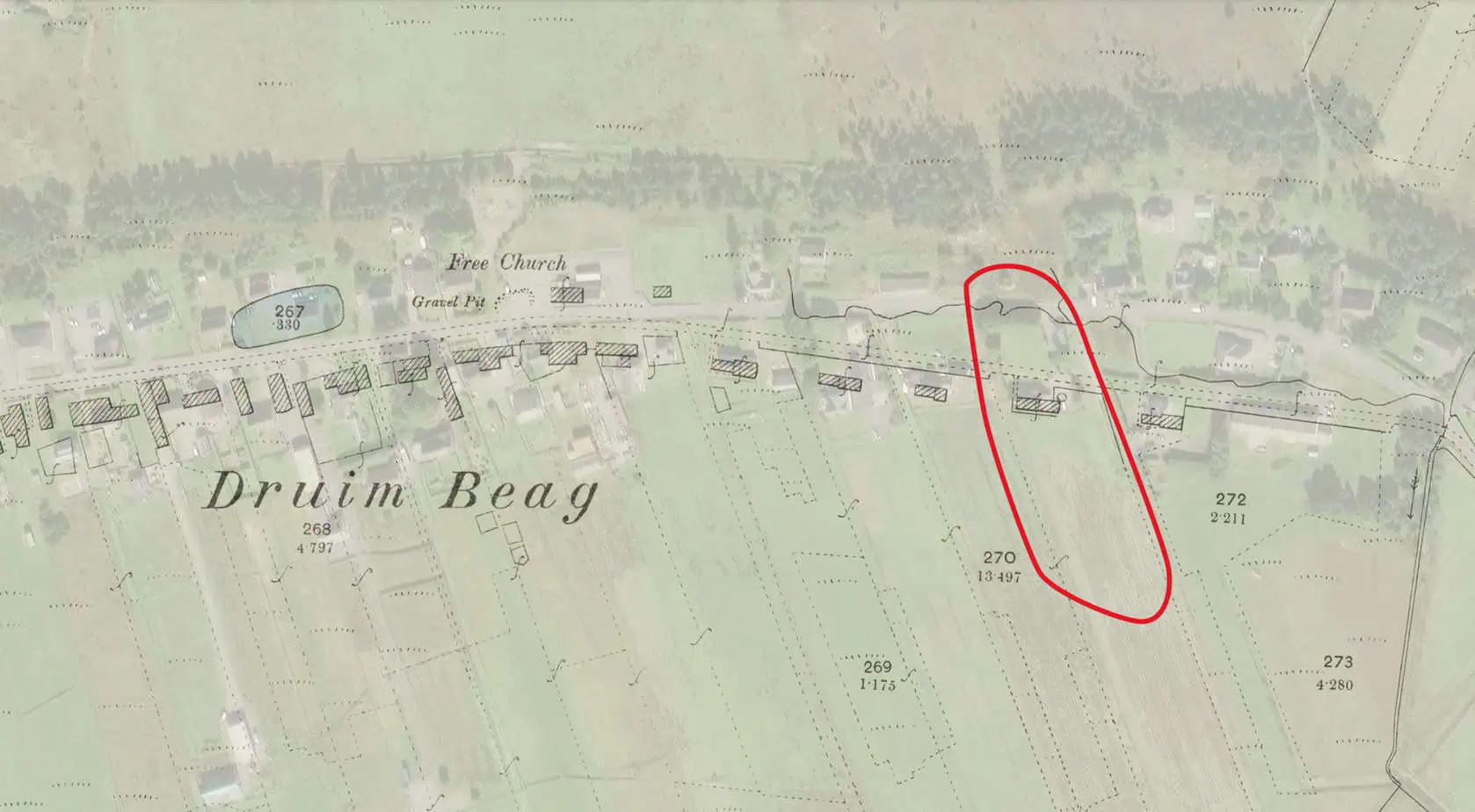
32 Aird Tong, Isle of Lewis
A historical Ordnance Survey map from 1895 shows the location of 32 Aird Tong, marked clearly for reference.
Birth of Janet “Jessie” Ferguson
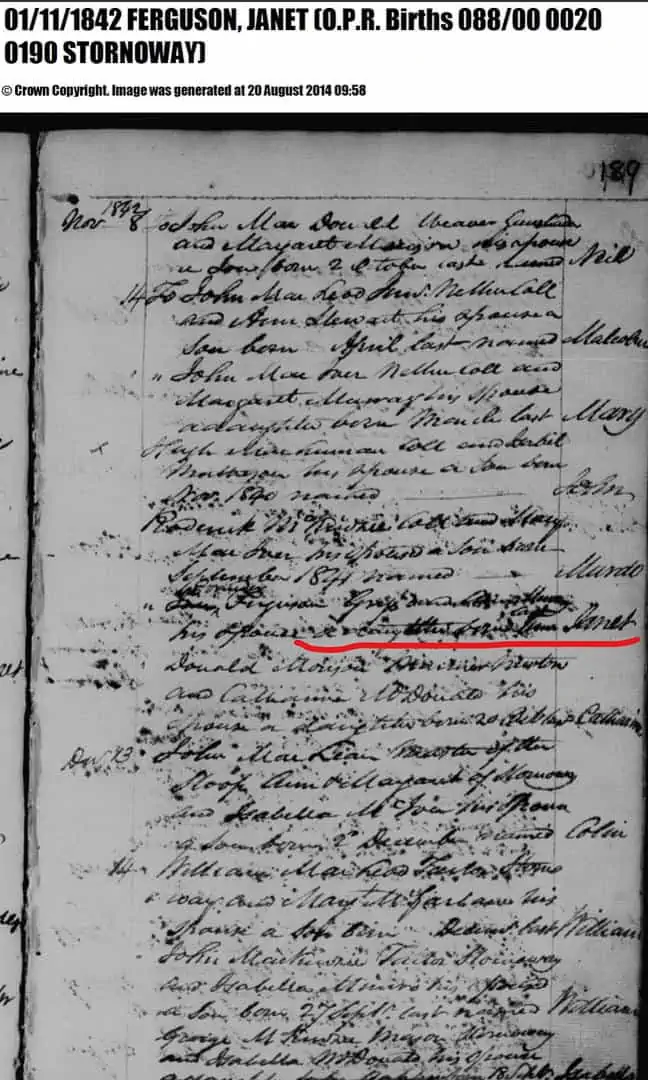
Parish Registers from Gress record Jessie’s birth, though the handwriting is difficult to read. It can be transcribed as:
-
- “Evander Ferguson and Ann Murray, his spouse, a daughter born [illegible], Janet.”
Marriage
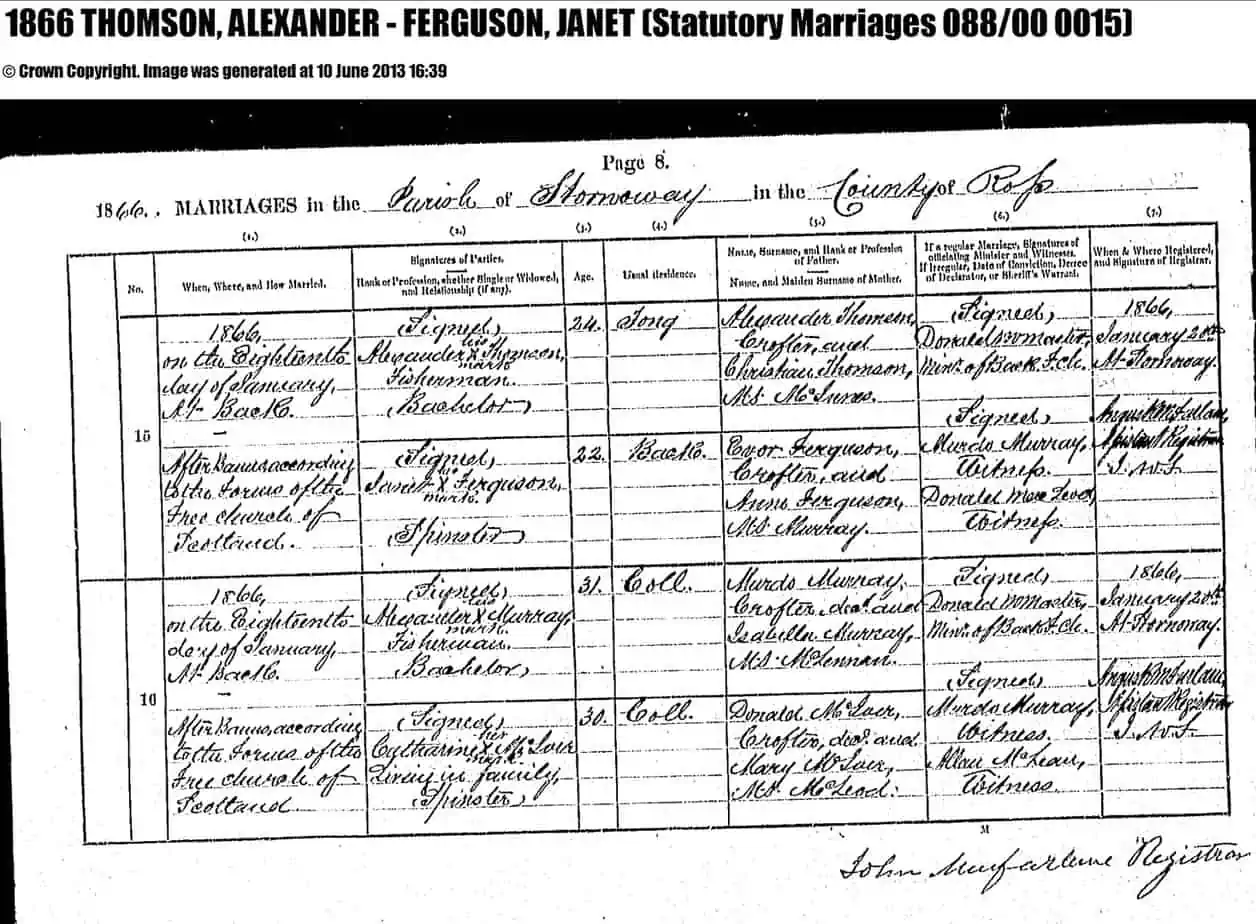
Alexander and Jessie began their married life in this environment. When they married, Alexander worked as a fisherman, while his father had been a crofter. The marriage record reveals a small but telling detail: both Alexander and Jessie signed with a cross, a reminder that formal education was limited, and that their knowledge came instead from lived experience, hard work, and tradition.
Fishing Industry
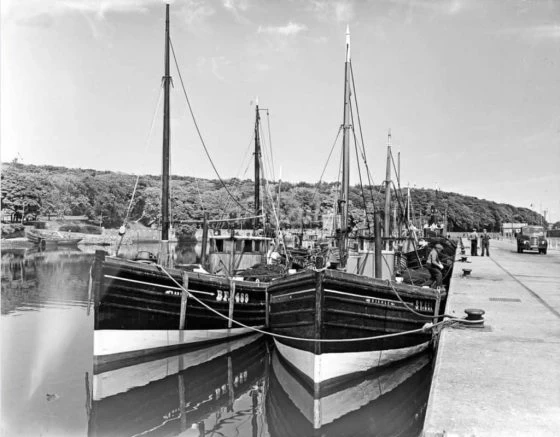
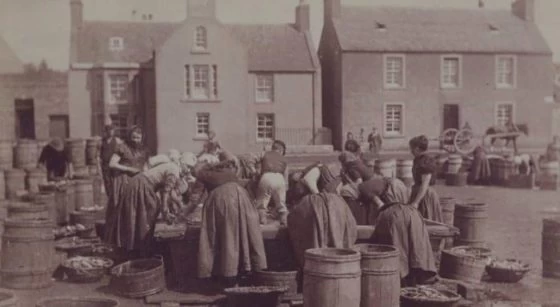
Fishing quickly became central to their livelihood. Like many men in Lewis, Alexander combined crofting with work at sea. The croft alone could not sustain a family, but the sea provided both income and food. He fished for herring with drifting nets and used long lines to catch cod and ling in deeper waters. Closer to shore, smaller boats worked for haddock, setting out for only a few hours at a time. The work was demanding and often dangerous, with long nights at sea followed by the constant routine of selling, cleaning, and preparing to sail again.
The Fishing Boat called “Nothing”
By the late nineteenth century, the herring industry had grown into a major enterprise, and Alexander fully embraced it. In 1884, he made a bold step forward by purchasing a larger fishing boat. It measured 24 tons, with a 52-foot keel—a significant investment and a sign of ambition.
When he went to register the vessel in Stornoway, however, an unexpected moment gave rise to one of the family’s most memorable stories. Asked for the boat’s name, Alexander hesitated. He had not yet chosen one. Caught off guard, he replied, “Nothing.” Before he could correct himself, the clerk had already written it down.
And so, the boat became Nothing.
Alexander accepted this as God’s will, but others were less convinced. Fishermen were deeply superstitious, and few were willing to risk their lives aboard a vessel with such an ill-omened name. It took considerable persuasion before he gathered a crew. Yet by the end of the season, the Nothing proved itself, ranking among the top earners. After that, no one hesitated to sail with him again.
Herring Fishing
Each year, the herring season took Alexander far from home. Beginning in the western waters around Barra and Stornoway, the fleet would move steadily eastward and southward—reaching Wick, Lerwick, and eventually the coasts of England. By autumn, they fished as far as Yarmouth and Lowestoft before turning back north again.
On one such journey, Alexander did something extraordinary. Returning from East Anglia, he brought back not goods or supplies, but an entire windmill. Its sails were so large that when it was installed at 32 Aird Tong, the machinery had to be placed on an upper floor. To accommodate it, a two-storey extension was built onto the house—an addition that remained for generations.
The windmill must have been a remarkable sight—and sound. Later, when the space housed a tweed weaver’s loom, it was said to be noisy, but never as loud as the old windmill. Looking back, one cannot help but wonder whether Alexander had ever considered the benefits of proper lubrication.
Elder of the Kirk
Beyond his work, Alexander played an important role in the spiritual life of the community. He served as an elder of the Kirk at a time when Tong had no formal church building. Instead, the villagers built a simple meeting house, where elders led services in Gaelic. When a minister from Back could not attend, Alexander would take the service himself.
This included leading the singing—a task for which he was, by all accounts, poorly suited. The psalms were sung using a method called “presenting,” where the leader sang each line and the congregation followed. Family stories recall that whenever Alexander led, the congregation invariably sang to the tune of St. David—not because his version resembled it, but because it was the only tune, he ever attempted.
His reputation for singing lived on. Years later, when I tried to join the junior choir in Stornoway, the teacher—who had known my grandfather—listened briefly before refusing me. She remarked that I was not as good a singer as he had been. It took me some time to recognise the humour, and the truth, in her judgment.
War Service
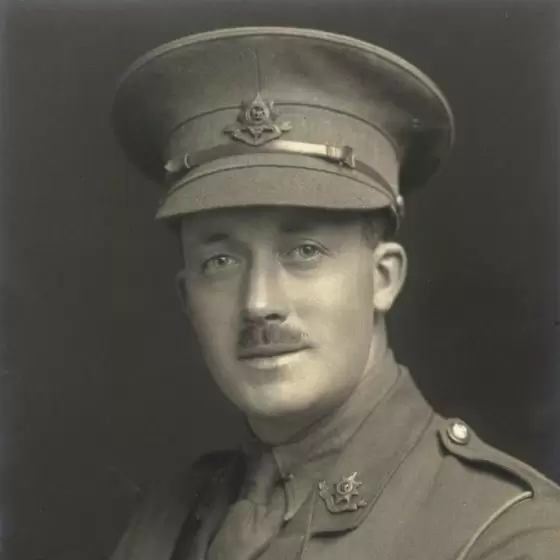
Alexander’s life also included military service. He served in the South African Defence Force during the Boer War and later in the First World War. His family, like so many others, felt the cost of these conflicts. My grandfather, John Thomson, was lost at sea in the Mediterranean in 1917, and other relatives also served.
Through all of this—work, faith, hardship, and humour—Alexander and Jessie built a life that left a lasting mark on their family. Their story lives on not only in records and memories, but in the house at 32 Aird Tong, and in the generations who followed them.