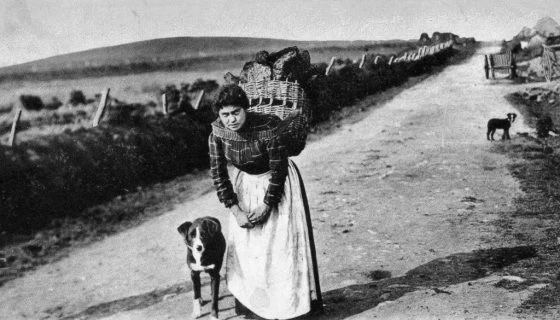
Alexander Thomson and Christina MacInnes
Alexander Thomson
In the early years of the 19th century, on the rugged Isle of Lewis in Scotland, two lives began that would eventually intertwine into a remarkable family story.
Alexander Thomson was born in 1813 in the small village of Coll. He grew up there, the son of James Thomson and Mary MacAulay, in a close-knit community shaped by land, weather, and tradition.
Christina MacInnes
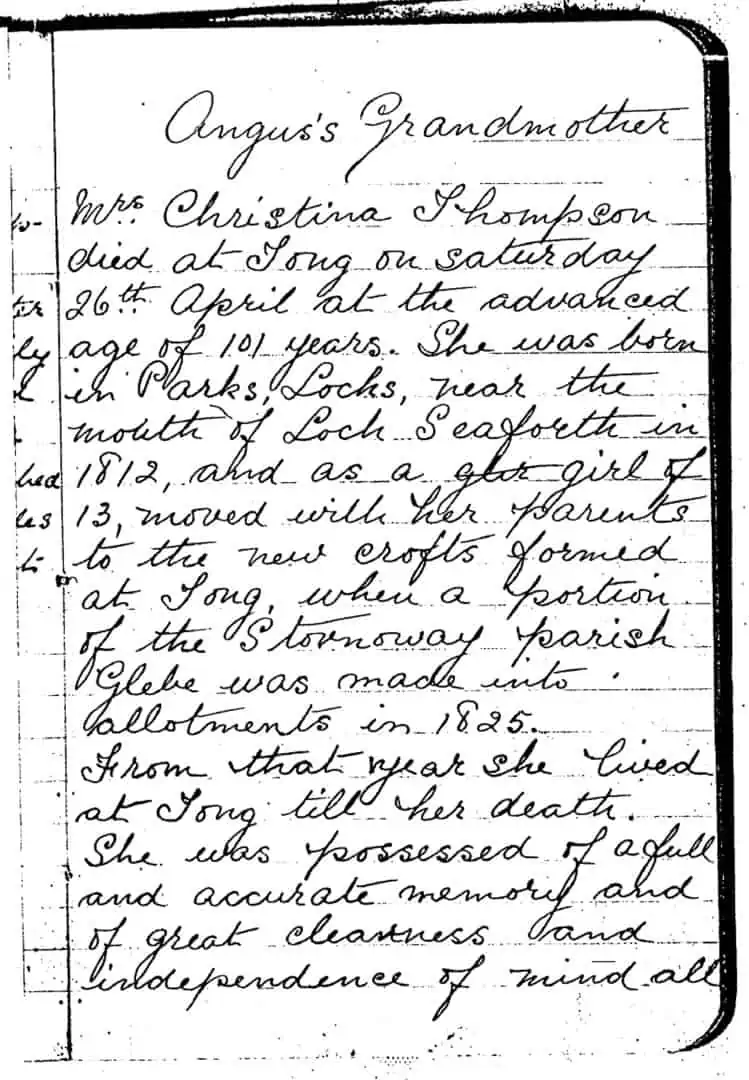
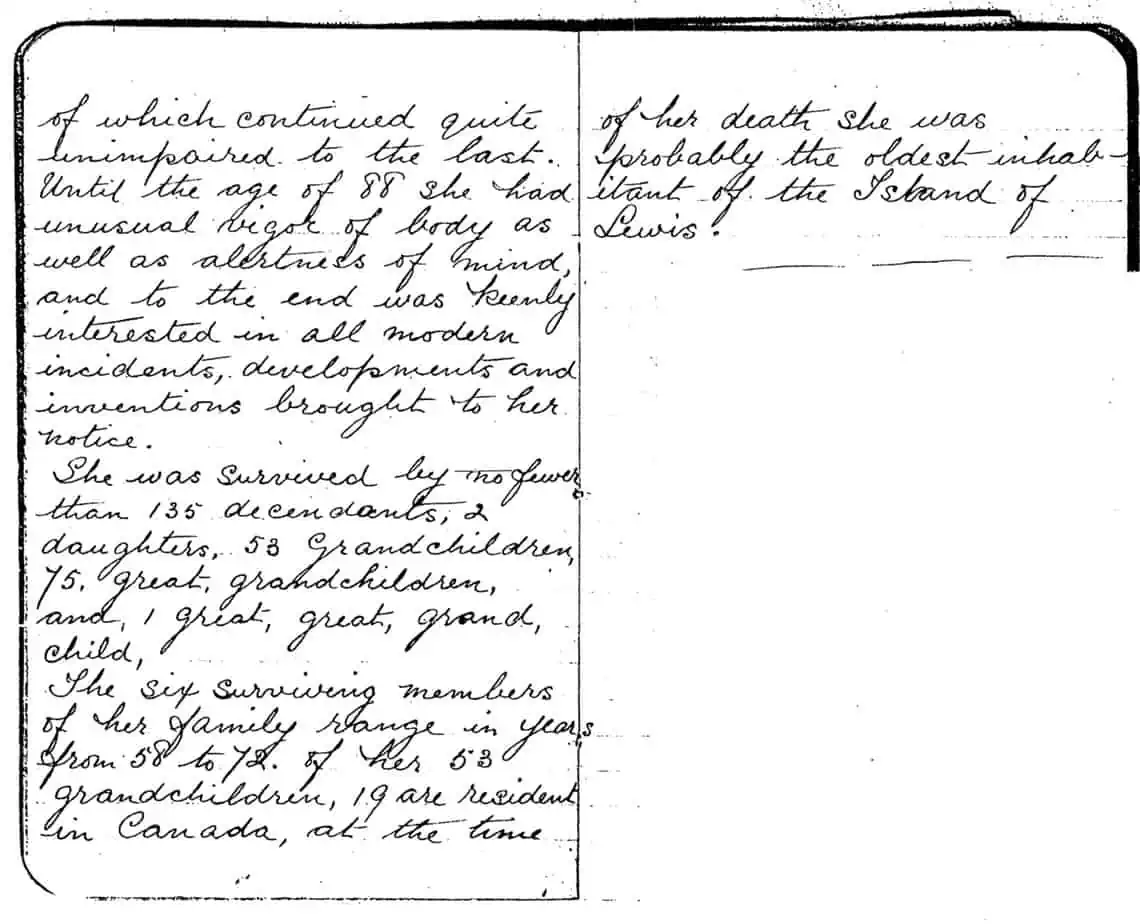
Just a year earlier, in 1812, Christina MacInnes—known to many as Kirsty—was born in Brollum, in the district of Pairc. Her parents, John MacInnes and Mairi MacLeod, raised her in a place that would not survive the upheavals of the century. By the 1840s, the Highland Clearances swept through the area, and Brollum was abandoned, eventually falling into ruin. But Christina’s family had already moved on. Around 1826, when she was still a young girl, they settled in Tong—a place that would remain her home for the rest of her extraordinarily long life.
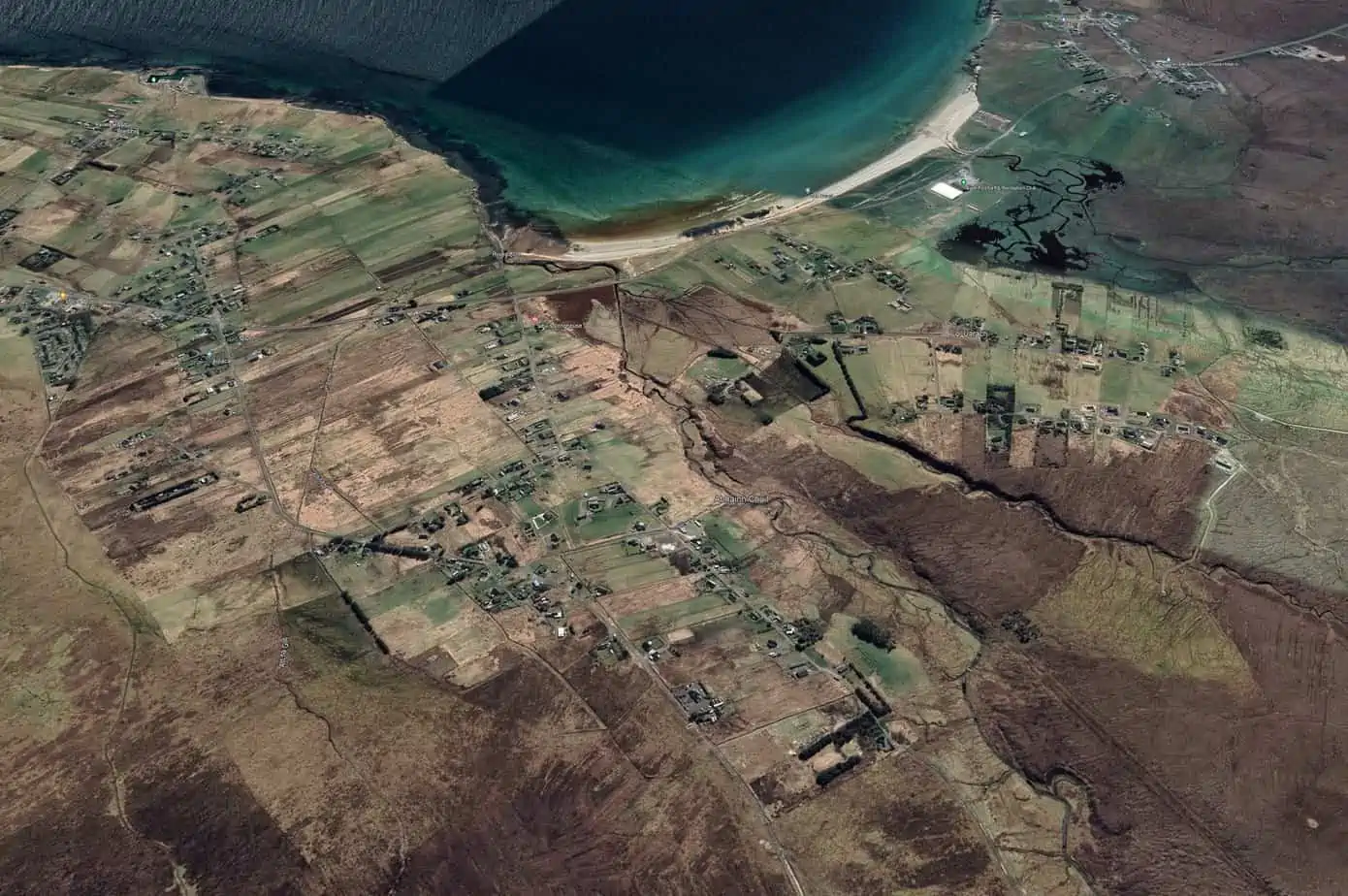
The Village of Coll
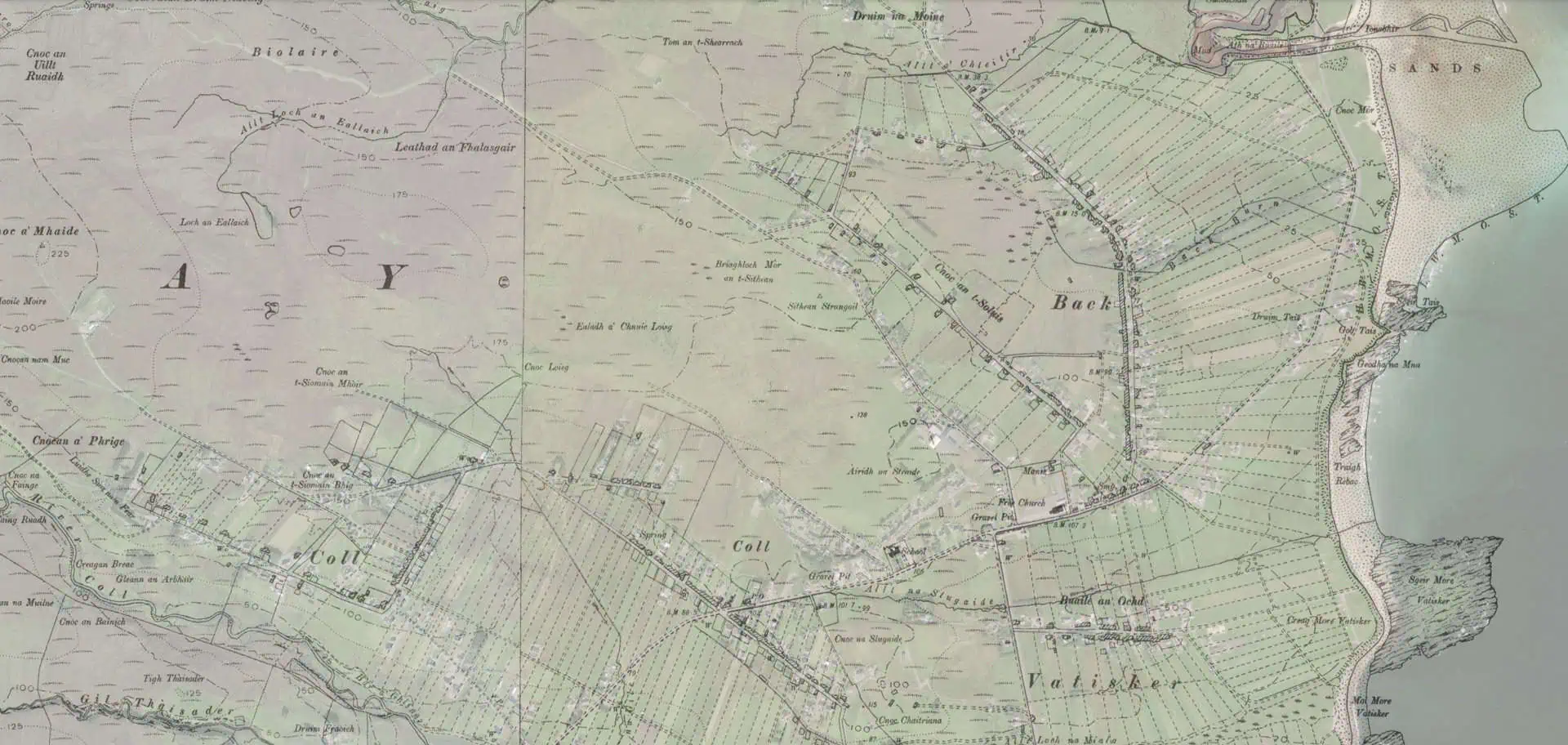
Christina arrived in Tong at about thirteen years old, when new crofts were created from land once belonging to the parish of Stornoway. From that moment on, her life became rooted there. She would live in Tong for nearly nine decades, witnessing a world that changed beyond recognition.
The Village of Tong
Those who remembered her spoke of a woman with a sharp mind and a strong spirit. She retained a clear and accurate memory well into old age and stayed curious about the world around her, even as new inventions and ideas emerged. She remained physically strong and mentally alert until her late eighties, and even in her final years, she followed modern developments with keen interest.
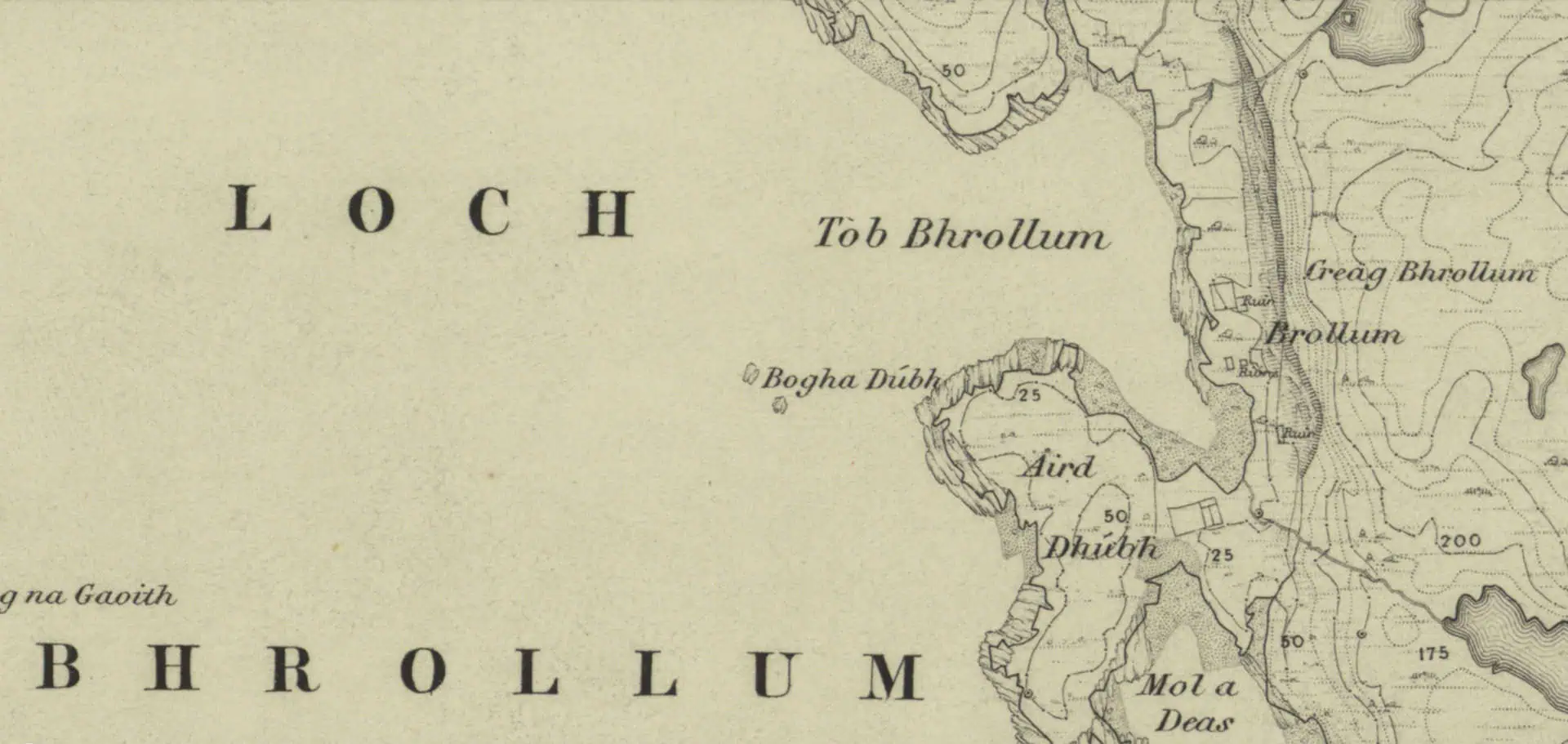
Brollum, Pairc District, Lewis
When she died at the remarkable age of 101, she left behind not just memories, but a vast living legacy: 135 descendants spanning children, grandchildren, and great-grandchildren—some of whom had already begun new lives far from Lewis, particularly in Canada. At the time of her death, she was thought to be the oldest person on the island.
Her story sits within a wider story—that of the Thomsons of Tong, and of a way of life shaped by crofting.
Life Outside Stornoway
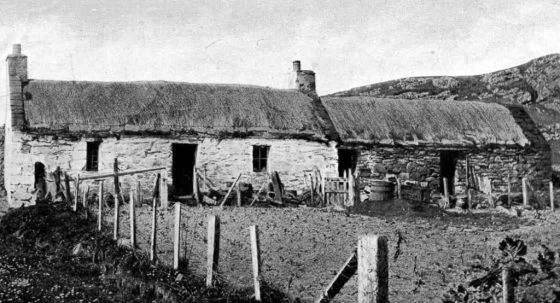
Life outside Stornoway revolved around small plots of land known as crofts. Families worked these modest holdings, typically no more than six or seven acres, and depended on them for survival. Though they did not own the land, crofters gained security through the Crofters’ Act of 1885, which allowed them to pass their crofts down through generations.
But a croft could sustain only one family. As children grew up, they faced a difficult reality: most would have to leave. And so, across the 19th and early 20th centuries, many men and women from Lewis set out for distant shores—Canada, America, Australia, New Zealand—carrying with them memories of home and the hope of opportunity.
The Thomsons of Tong
The rhythms of life they left behind were deeply tied to the land. In summer, families moved their cattle to the moorlands, living in small, simple shelters known as shielings. These were humble places—stone walls, earth roofs, just enough room for a bed, a fire, and a couple of chairs. Often, it was the grandmother and children who stayed there, watching over the cows as they grazed freely.
Despite the hard work, those summer months could feel almost idyllic. Days were spent in the open air, surrounded by quiet lochs and wide skies. It was a life that left a deep impression, one that found its way into Gaelic songs and poetry.
Crofting
Generations later, the story of Alexander and Christina—and of all those connected to them—continued to unfold in a different way. My father, in his retirement, devoted himself to tracing the Thomson line. He spent hours in the Record Office in Edinburgh, carefully piecing together names, dates, and connections. When he could go no further back, he turned his attention outward, following the lives of those who had left Lewis.
He wrote to Thomsons scattered across the world, inviting them to share their stories. And they did. Letters came back filled with memories—of departures, of long sea journeys, of new beginnings in unfamiliar lands. Through these voices, he built something more than a family tree: he created a collection of human stories.
The Spirit Continues
That spirit continues. Where he followed one line, I want to follow them all—to trace not just names, but lives, and to understand the people behind them. Because this is more than a record of ancestry. It is a story of resilience, movement, and memory—stretching from small crofts on Lewis to far corners of the world.
And at its heart stands Christina, who began life in a village that disappeared, and ended it as the matriarch of a family spread across continents—her memory, like her story, enduring.