Our Prehistoric Journey
Our Prehistoric Journey
Our Prehistoric Journey
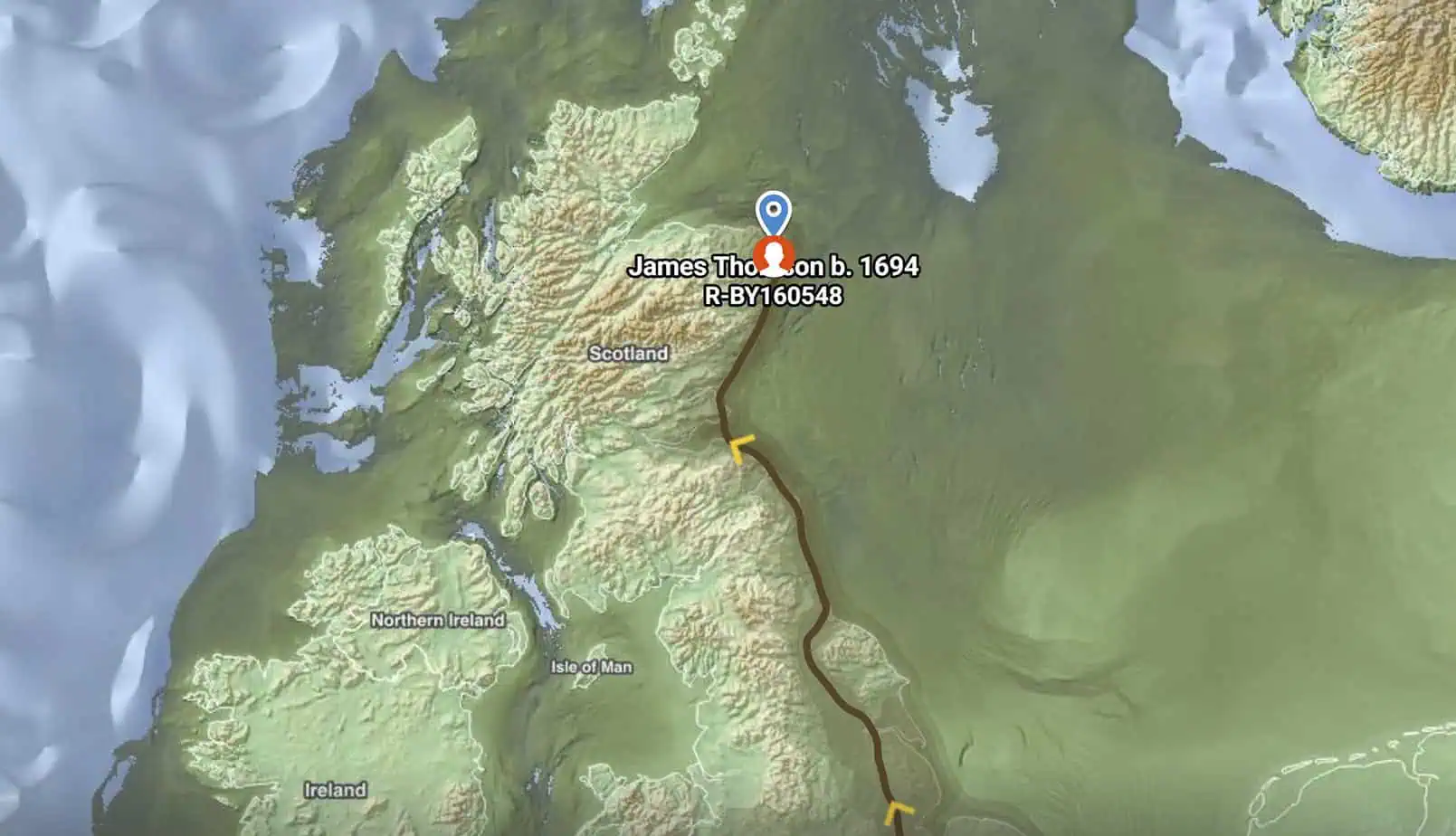
When I decided to take a Y-DNA test, I didn’t expect anything extraordinary. My goal was simple: to confirm what my family tree already suggested—that I am descended from James Thomson, a teacher from Banffshire who moved to the Isle of Lewis in 1736. I also hoped the test might point to the exact area in Banffshire where he had lived.
I knew that Y-DNA could trace ancestry far back into prehistory, but that had never really interested me. My focus had always been on ancestors I could relate to—people whose lives, work, and environments I could imagine. Once family history becomes just a list of names and dates, I tend to lose interest.
So, I was surprised to find just how fascinating our much older ancestral story turned out to be.
What is a Haplogroup
A haplogroup is like a very ancient branch on your family tree. Each one represents a common ancestor who lived at a specific time and place in the distant past.
These branches are identified through small mutations in DNA. By studying both modern DNA and ancient remains, scientists can trace where these mutations occurred and map how human populations moved across the world over time.
By discovering your haplogroup, you unlock a story about your direct paternal line that cannot be found through traditional genealogy.
You can read a more detailed explanation of Haplogroups on the FamilyTreeDNA website.
Our Ancestors in Southern England
My Y-DNA results not only connected me to more recent Thomson relatives in Aberdeenshire but also revealed a much older story.
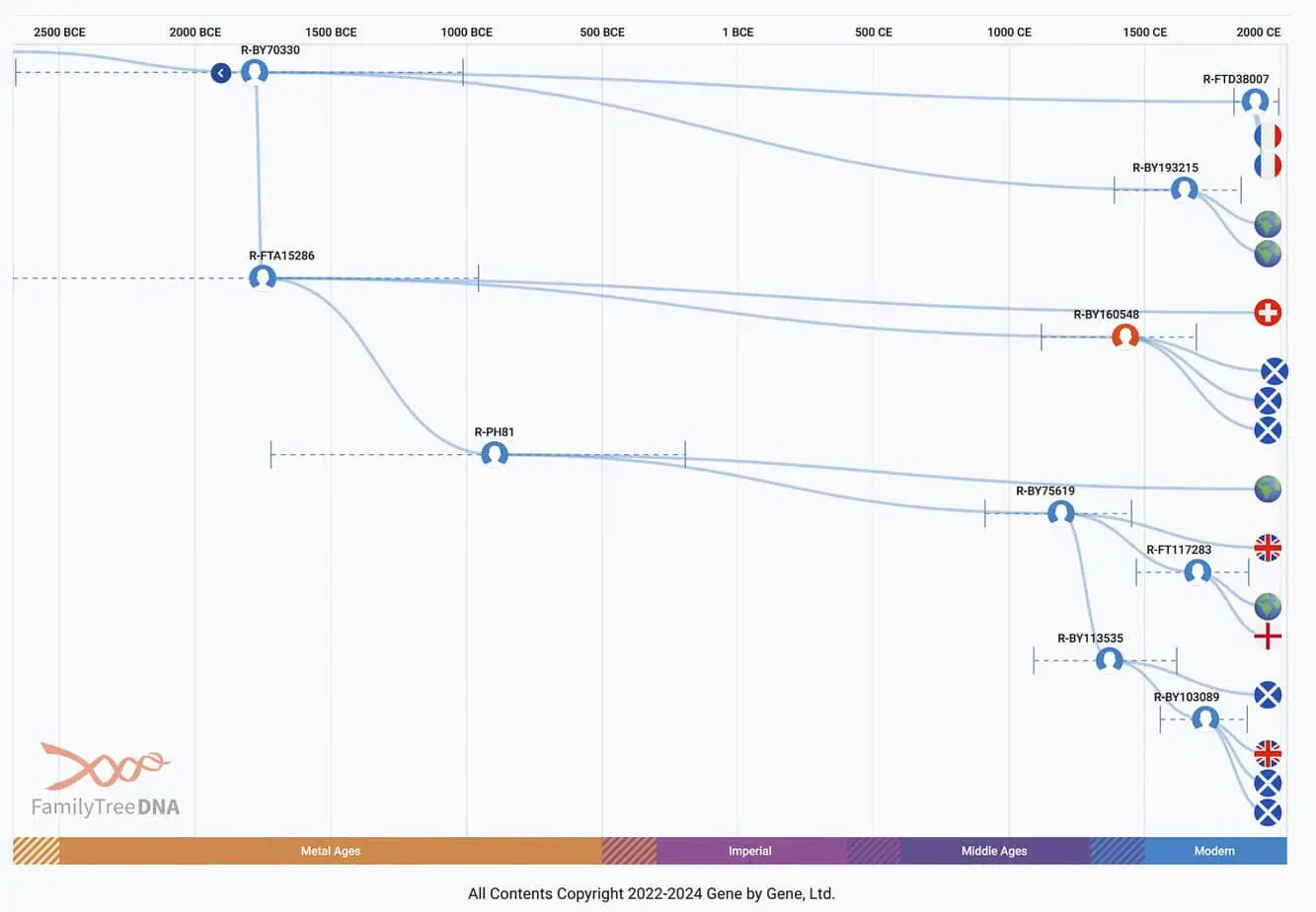
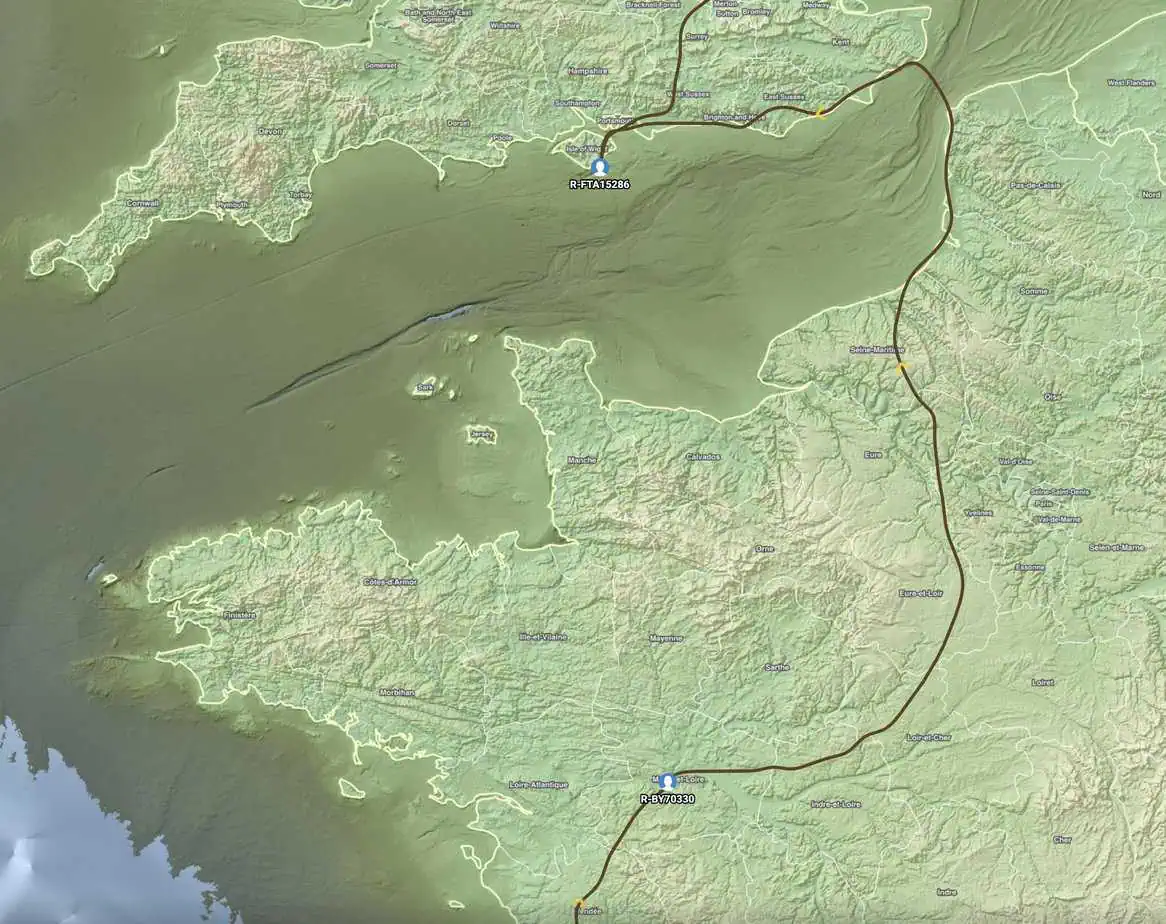
Our ancestors arrived on the south coast of England around 1700 BC, during the early Bronze Age, eventually settling on the Isle of Wight near Ventnor. This link is confirmed by DNA evidence from ancient skeletons found at archaeological sites, which share the same distinctive genetic markers.
Interestingly, their journey mirrors modern migration in some ways. Today, people cross the English Channel in search of better opportunities. Around 1750–1700 BC, our ancestors did something similar, moving from the Loire Valley in France to the Isle of Wight within about 50 years.
At that time, Britain had only recently become an island. Rising sea levels at the end of the Ice Age flooded the land bridge known as Doggerland, creating the English Channel.
Life in the Early Bronze Age
Human history in Britain stretches back hundreds of thousands of years, but continuous settlement began after the last Ice Age.
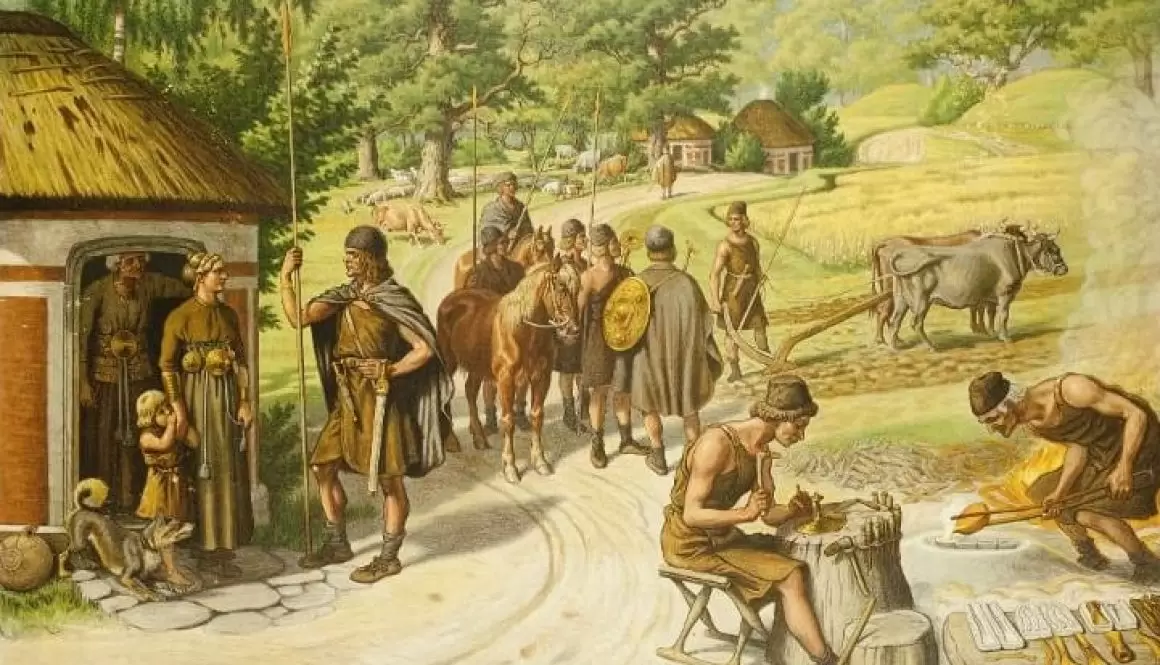
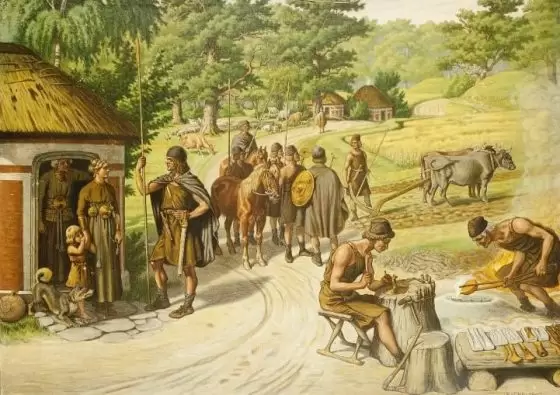
By the Bronze Age (around 2300–800 BC), life was changing. Metal tools and weapons appeared, along with distinctive “Beaker” pottery. People began burying their dead in individual graves, often covered by round burial mounds.
Our ancestors arrived during this period, bringing with them new technologies and ways of life.
The Journey to Aberdeenshire
There is a gap of around 3,000 years between our ancestors living on the Isle of Wight and their appearance in Aberdeenshire around 1450 AD.
We don’t know exactly when or how they made this journey north. However, their route would have depended heavily on the time period.
-
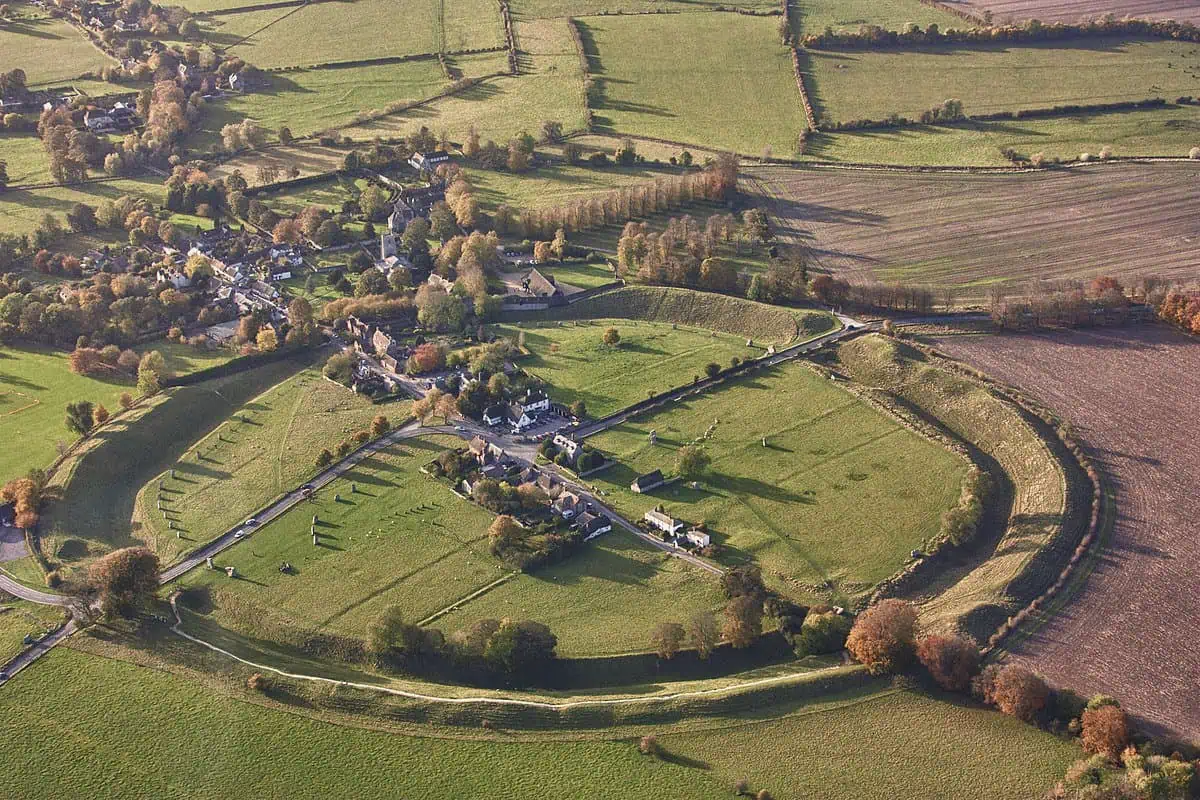
- In the Bronze Age, they may have travelled via important cultural centres like Stonehenge or Avebury.
- In later periods, they could have used ancient ridgeways—paths along higher ground that avoided forests and marshes.
- During Roman times, they might have followed the well-developed network of Roman roads.
As more people take DNA tests, future discoveries may help fill in these gaps.
Earlier Migration across Europe
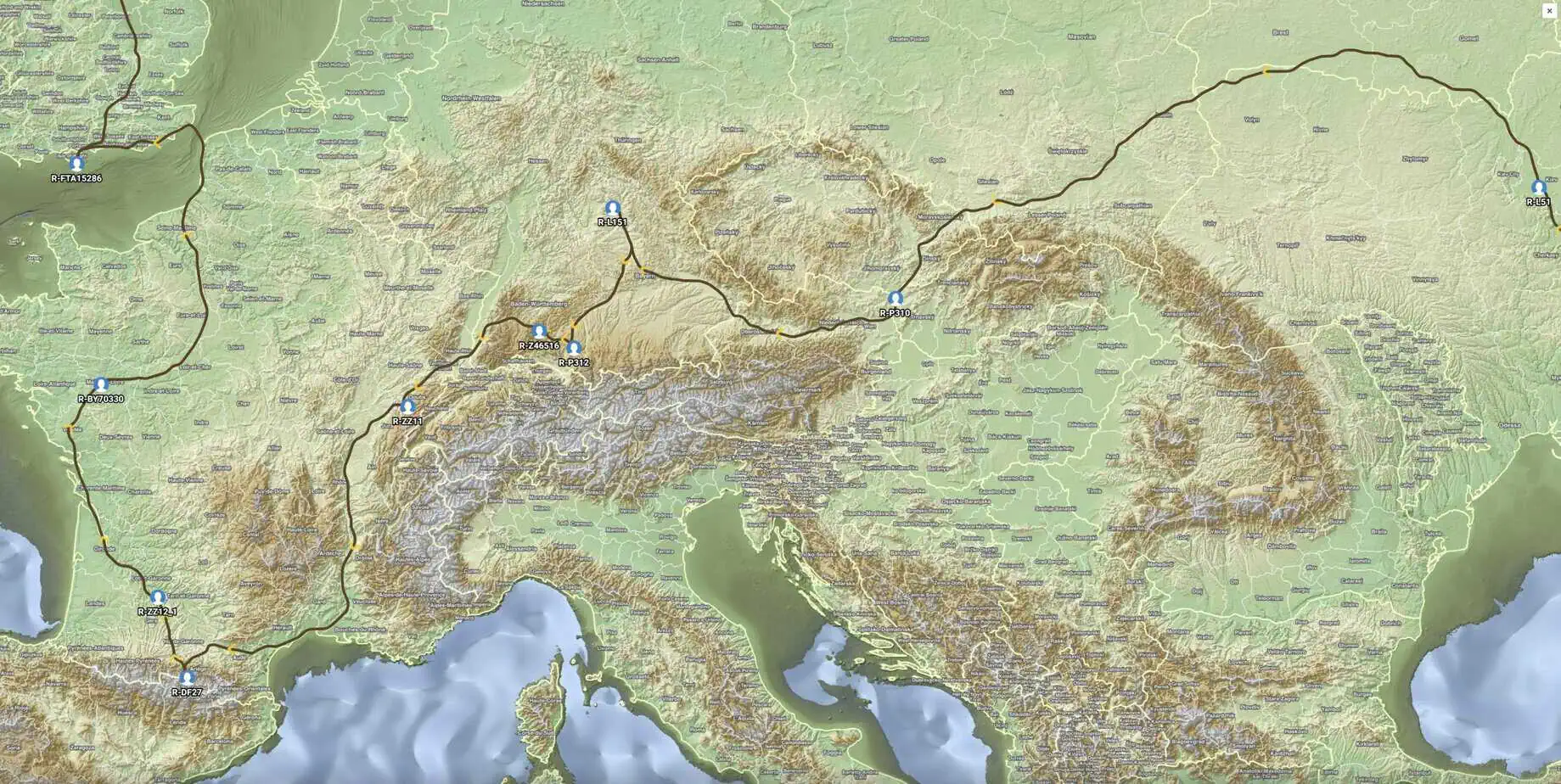
Our ancestors’ journey across Europe was surprisingly fast.
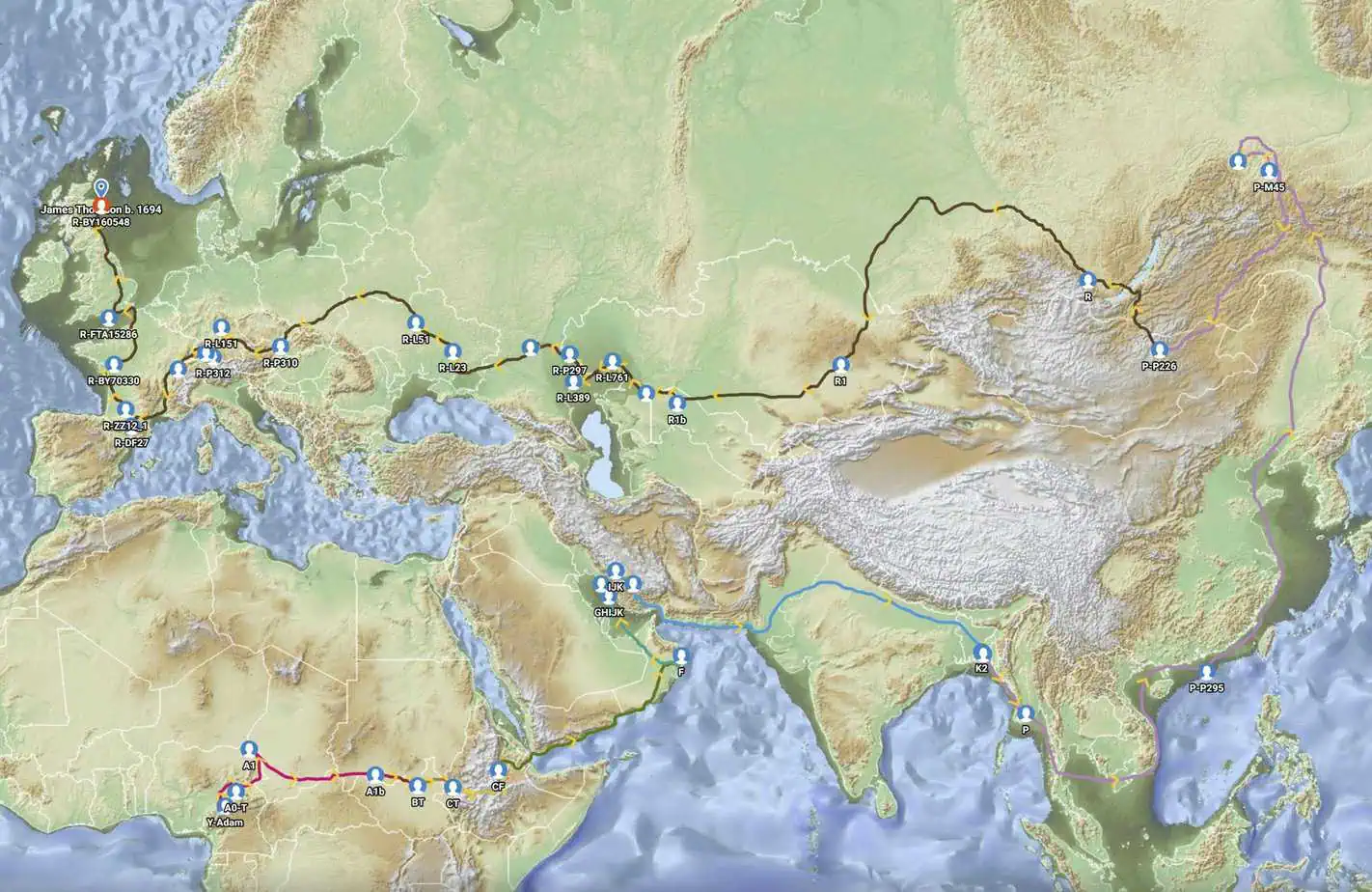
It took about 2,400 years for them to travel from Kyiv (in modern Ukraine) to the Isle of Wight. However, their later movement within Britain—from southern England to Aberdeenshire—took even longer, around 3,150 years.
Each stage of this journey is marked by a haplogroup—a genetic “signpost” showing where mutations occurred and populations split.
Life in the Stone Age
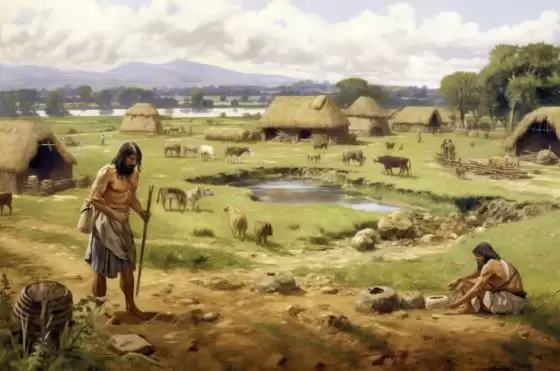
Before farming, human life revolved around hunting and gathering.
Early humans:
-
- Used stone tools and simple weapons
- Hunted animals and gathered plants
- Fished using nets and harpoons
- Made clothing and shelters from animal skins
Life was uncertain. A successful hunt meant a feast—but the next day, food had to be found all over again.
The Long Pause in Kazakhstan
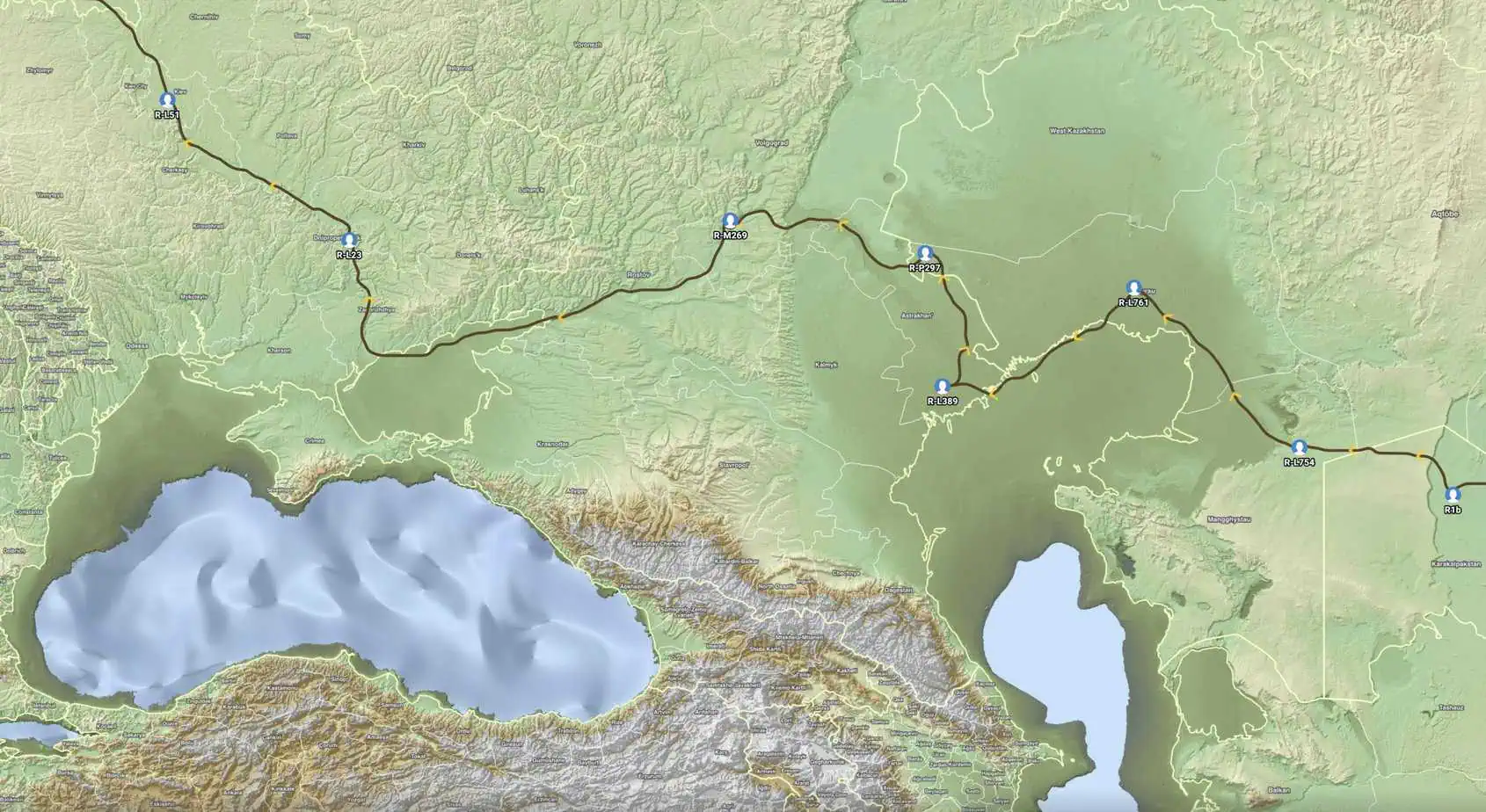
One of the most striking parts of our story is how long our ancestors stayed in one place.
They remained in southern Kazakhstan for around 13,000 years during the Paleolithic (early Stone Age). This suggests a long period of stability.
Migration began to speed up during the Mesolithic (middle Stone Age), as they moved into southern Russia near the Caspian Sea.
Later, during the Neolithic (late Stone Age), they moved into Ukraine and eventually into Western Europe.
The Full Journey
The full scale of this journey is remarkable.
Our earliest known ancestor lived around 232,000 BC near the border of modern Nigeria and Cameroon.
From there, over nearly 234,000 years, our ancestors:
-
- Spread across Africa
- Moved through the Middle East and India
- Reached Southeast Asia
- Travelled north through China into Mongolia
- Then turned west across Russia and Europe
- Finally arriving in Britain
It is an extraordinary story of movement, survival, and adaptation.
Acknowledgements
This account is largely based on information provided by FamilyTreeDNA, whose data and mapping have made it possible to trace this journey.
Y-DNA testing can help trace paternal ancestry (for males), while mitochondrial DNA (mtDNA) testing allows both men and women to explore their maternal line.