The Brettargh Family of Liverpool
The Brettargh Family of Liverpool
Overview
I traced the Brettargh family back to James Brettargh, who died in 1664, using family correspondence and pedigree records from the College of Arms. Our family once held the original documents, but we later donated them—along with the Yeates family correspondence and diaries—to the Kendal Record Office in Cumbria, where the public can now access them. You can also download the documents referenced in this article at the end.
To explore the family’s earlier history, I relied on an excellent article by R. Stewart-Brown titled The Brettarghs of Brettargh Holt in Woolton, published in 1936 in Volume 88 of the Transactions of the Historic Society of Lancashire and Cheshire. I include that material here with permission.
Rather than presenting a strict family tree, I focus on the family’s story—highlighting personal connections and illustrating how their fortunes rose and fell over the centuries.
Margaretta “Madge” Brettargh
Margaretta Brettargh, known as “Madge,” was born in Liverpool on 6 August 1802. She was the eldest daughter of William Brettargh and Margaret Kendall.
Her husband, John Richards, once wrote that the Brettargh family could trace its Liverpool roots back to the twelfth century, to the reign of King John.
Childwall and the Search for Family Connections
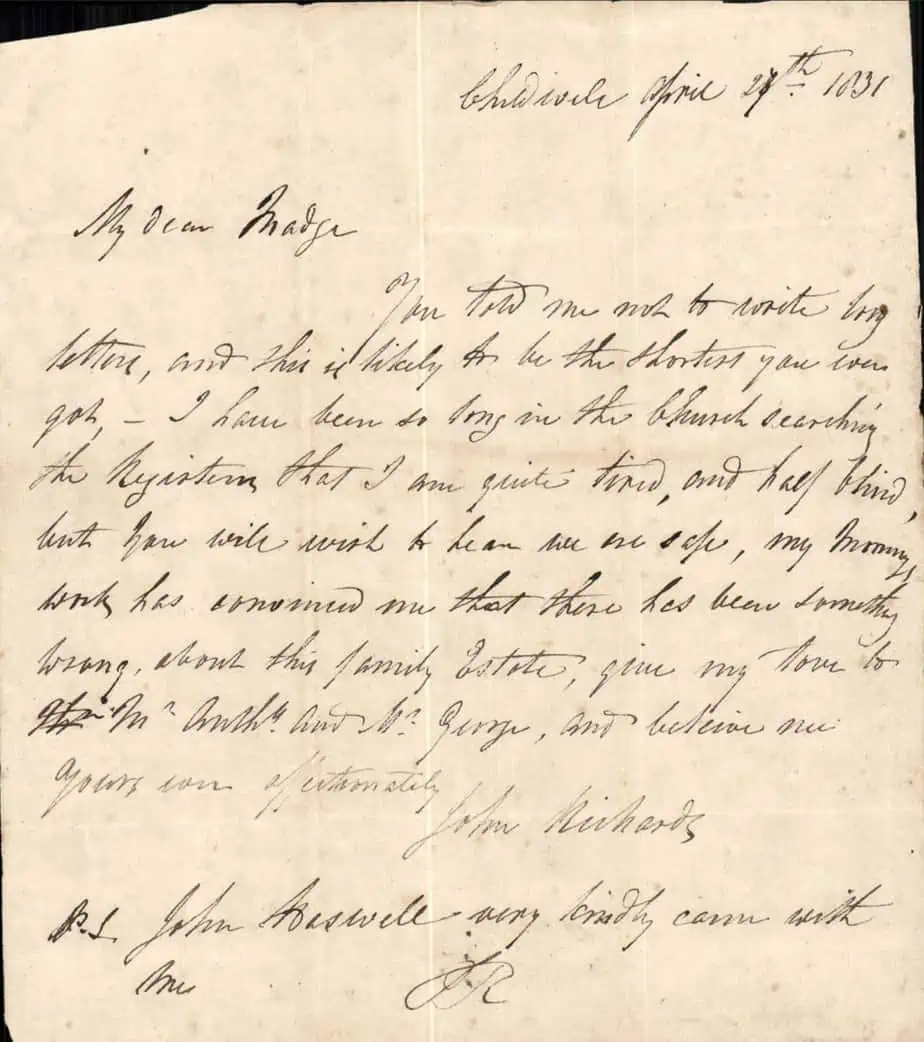
In April 1831, John Richards travelled to Childwall, Liverpool—the original home of the Brettargh family—to investigate his wife’s ancestry. He hoped to connect her father, William Brettargh, to the Brettarghs of Brettargh Holt. Perhaps he simply wanted to research family history, or perhaps he aimed to strengthen their social standing by linking them to a prominent armorial family.
He wrote to Madge:
“I have been too long in the church searching the registers… my morning’s work has convinced me that there is something wrong about this family estate.”
Despite his fatigue, John continued his search with the help of John Haswell.
Establishing the Pedigree
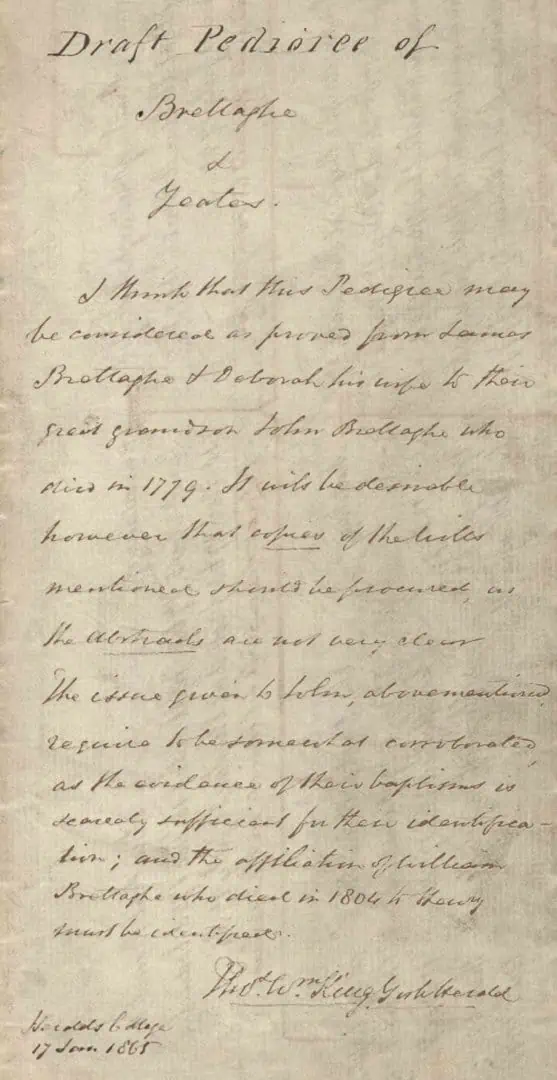
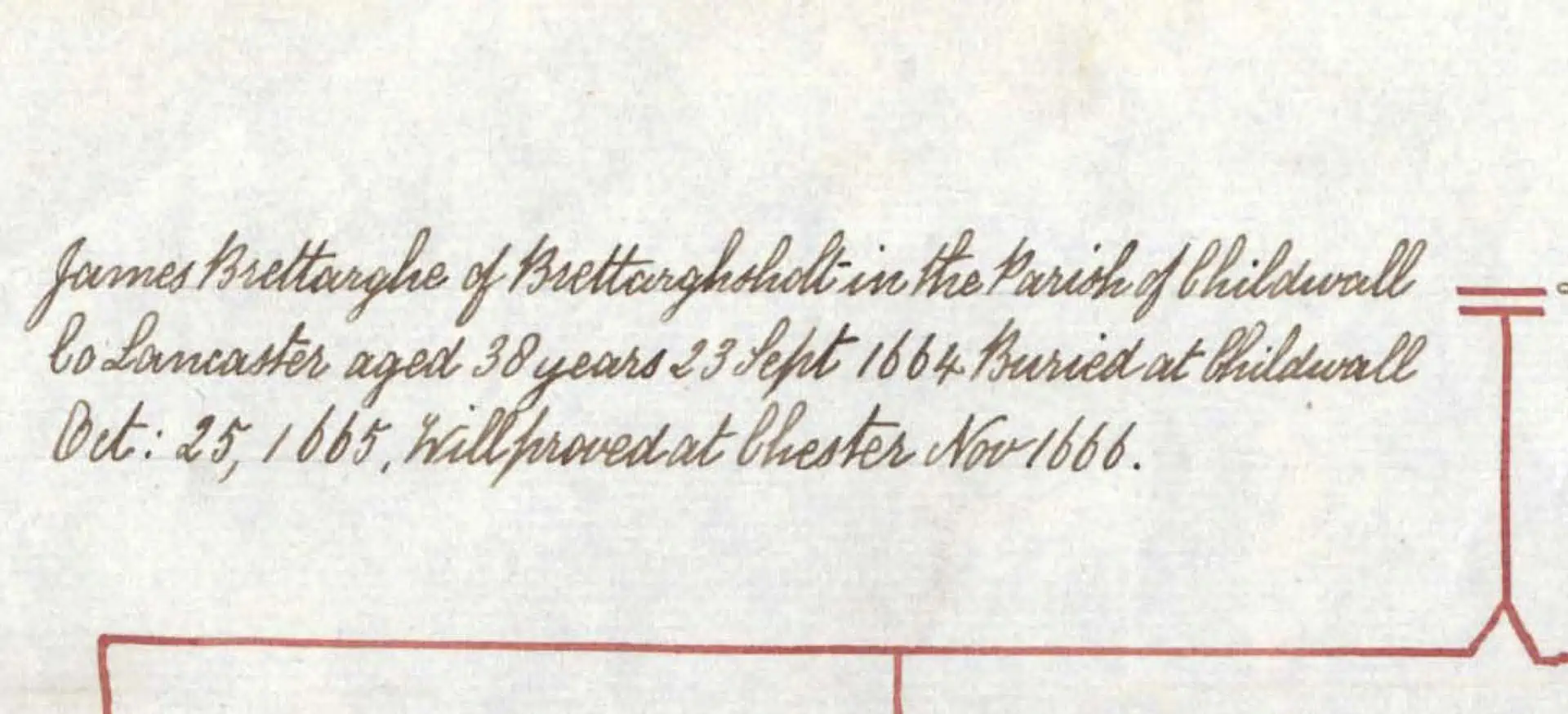
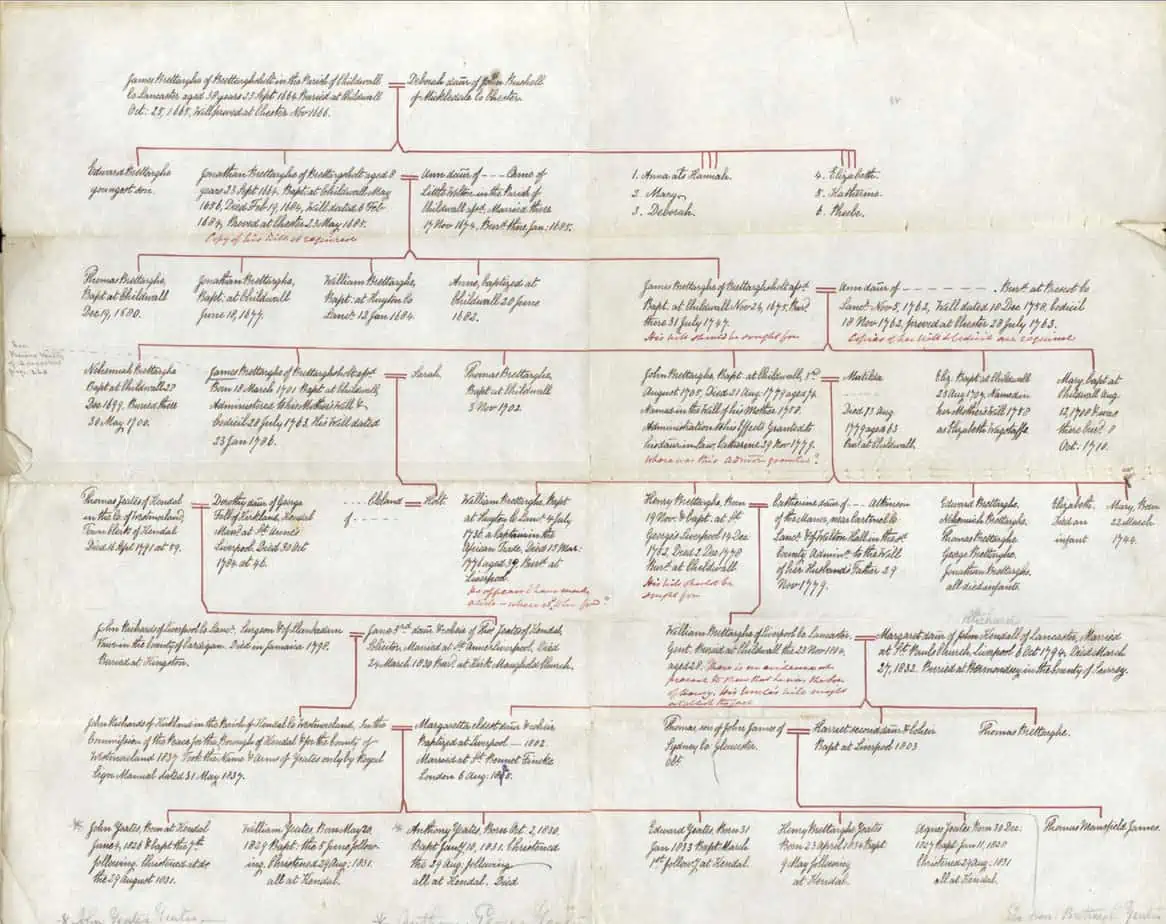
A draft pedigree later confirmed the family line from James Brettargh and his wife Deborah down to their great-grandson John, who died in 1779. However, Rev. William King, York Herald, noted that some details required further proof. He requested clearer copies of wills and stronger evidence to confirm certain family relationships.
The College of Arms eventually accepted the pedigree, so we can assume the family resolved these issues.
Brettargh Holt
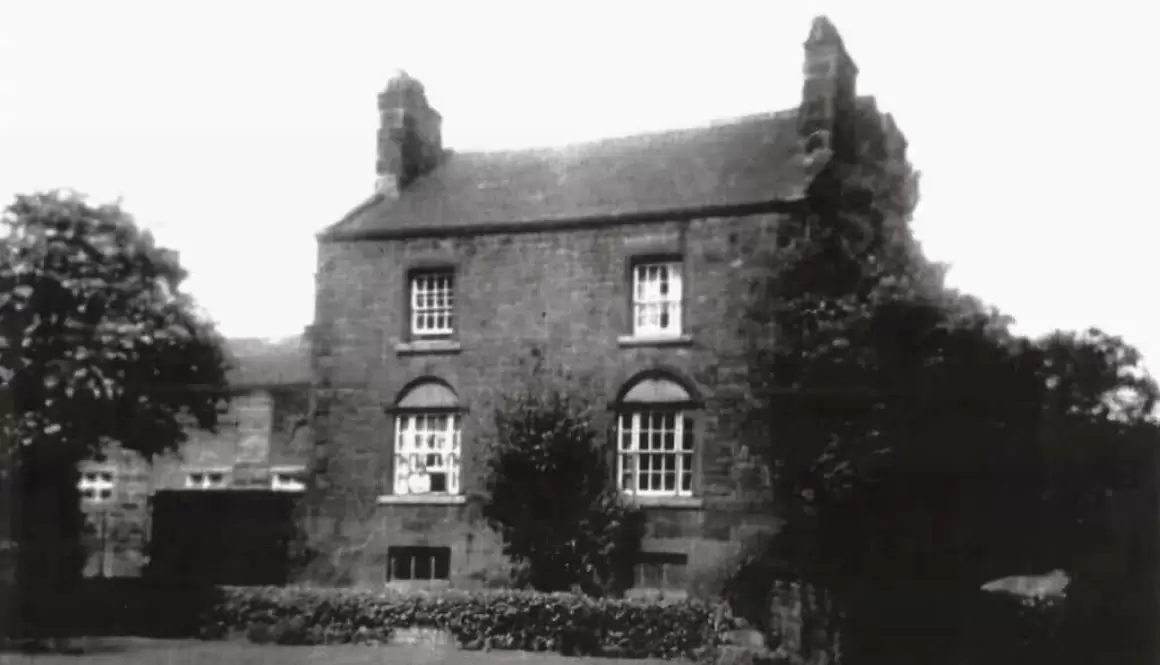
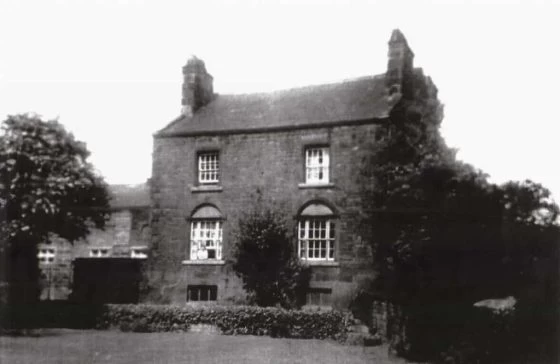
Brettargh Holt served as the ancestral home of the family. Although it no longer exists, it once stood in what is now the Childwall area of Liverpool. Today, the land lies near Childwall Golf Club.
The estate originally covered around 300 acres, located west of Tarbock Hall and north of Childwall Brook. All Saints Church in Childwall still contains many Brettargh memorials and graves.
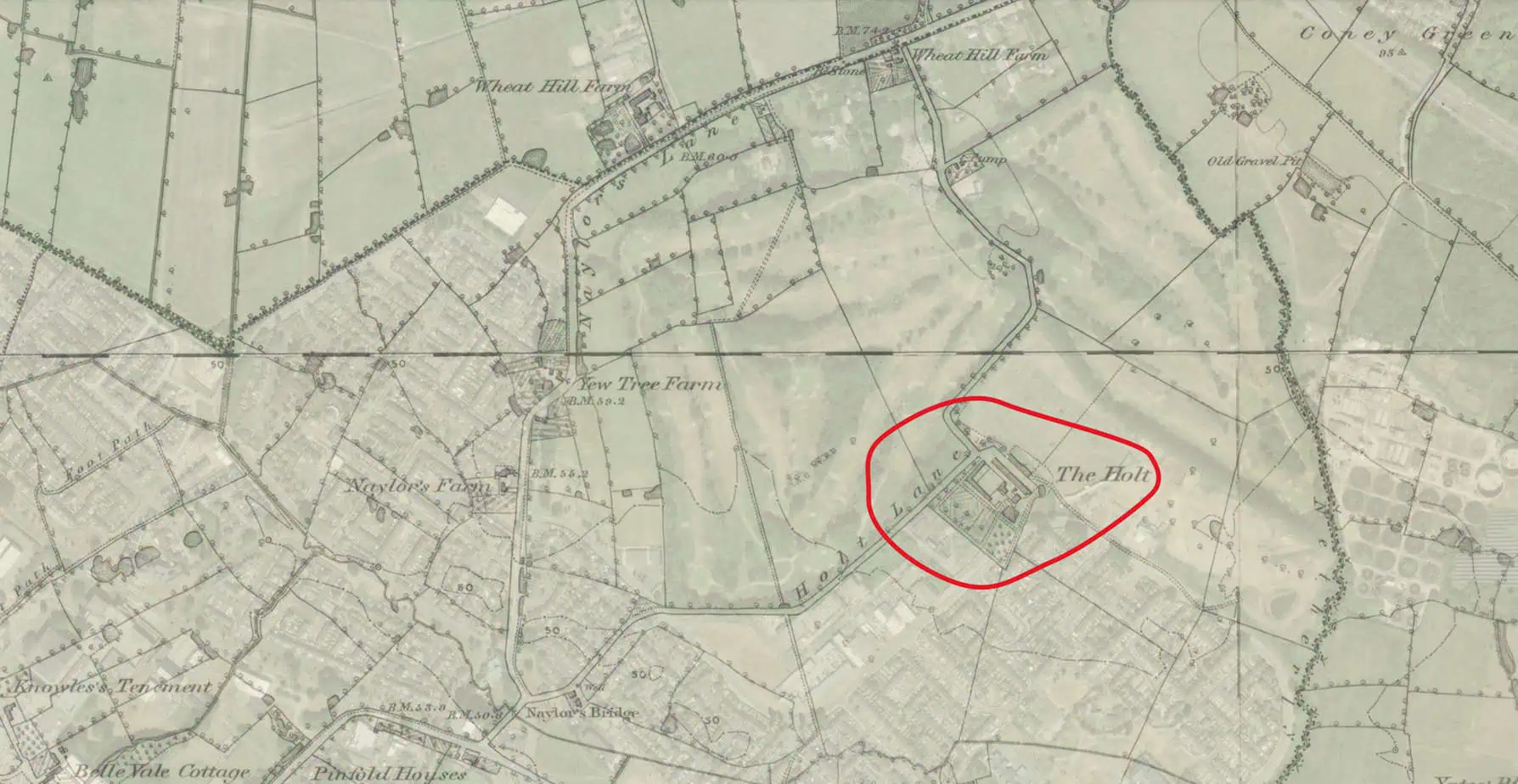
Location of Brettargh Holt
“The Holt” is located on the right of the map and is circled in red ink.
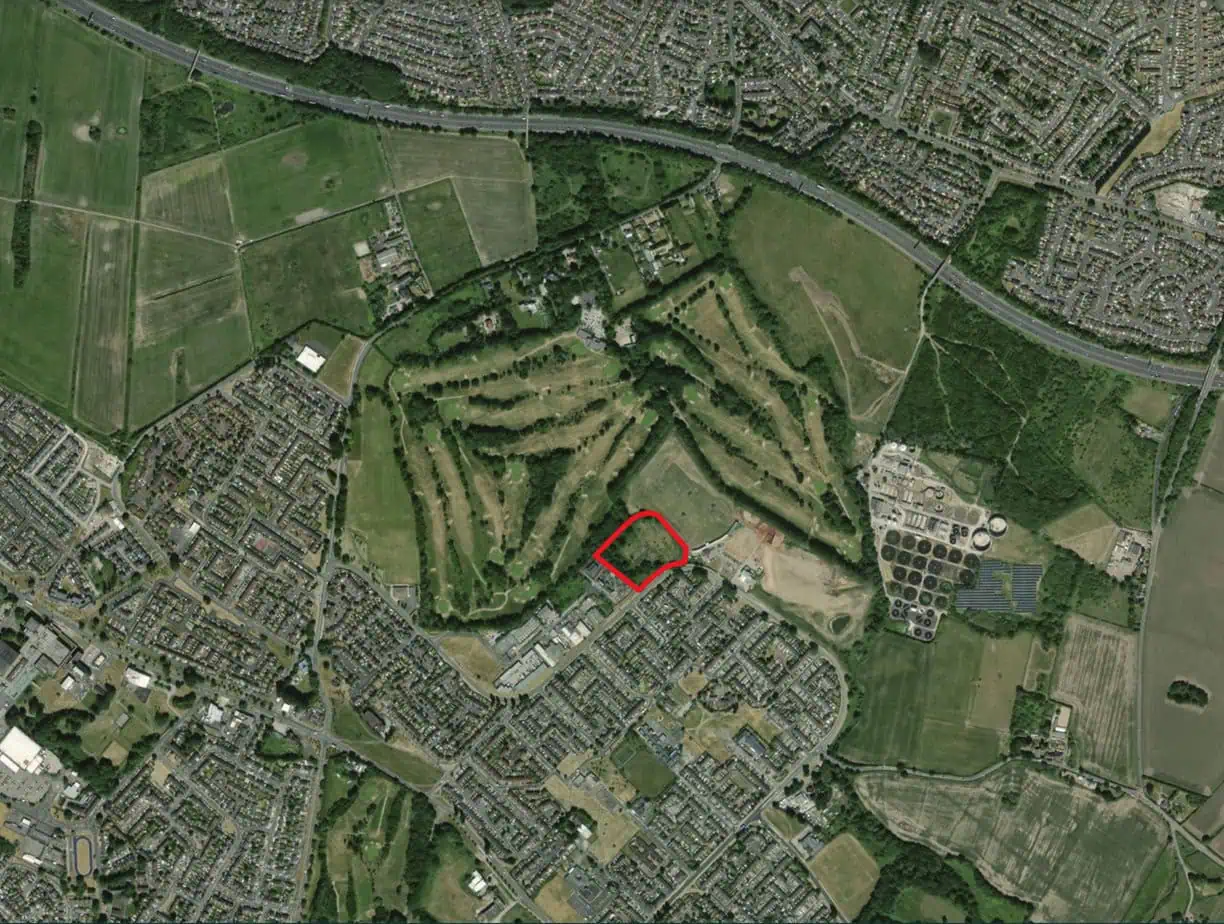
Location of Brettargh Holt Site Today
The location of Brettargh Holt has been identified in red ink on the satellite photograph opposite.
It is immediately adjacent to Childwall Golf Club which can be clearly seen to the north west, and the M62 is clearly visible at the top of the photo.
William Brettargh
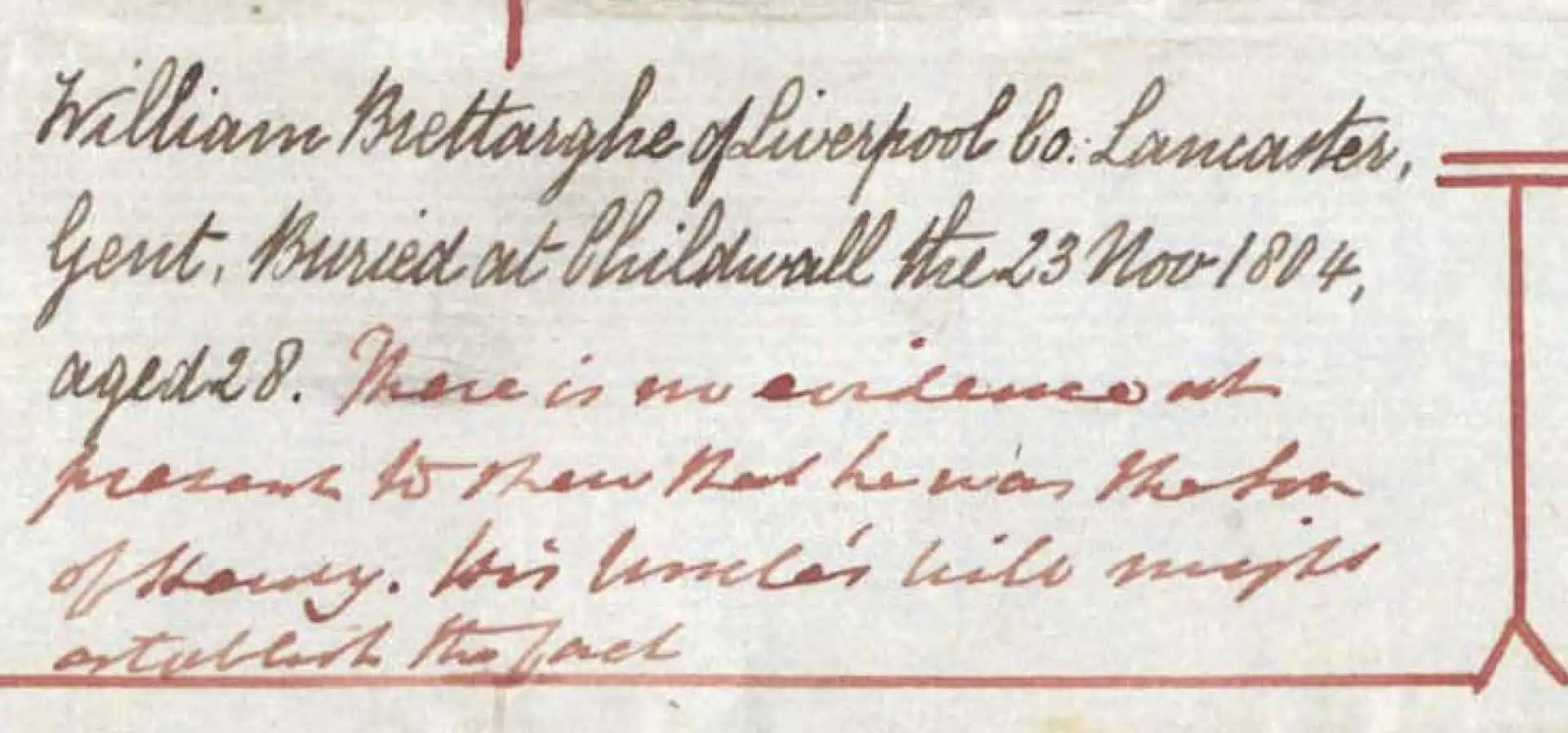
William Brettargh, Madge’s father, died when she was only two years old—coincidentally the same age at which her husband lost his father. This shared experience may explain why the couple took such a strong interest in establishing their lineage.
When reviewing the pedigree, the York Herald questioned whether William was truly the son of Henry Brettargh, noting that additional evidence—possibly from a relative’s will—was needed. Since the College of Arms later approved the pedigree, the family must have resolved this uncertainty.
Connecting the Families
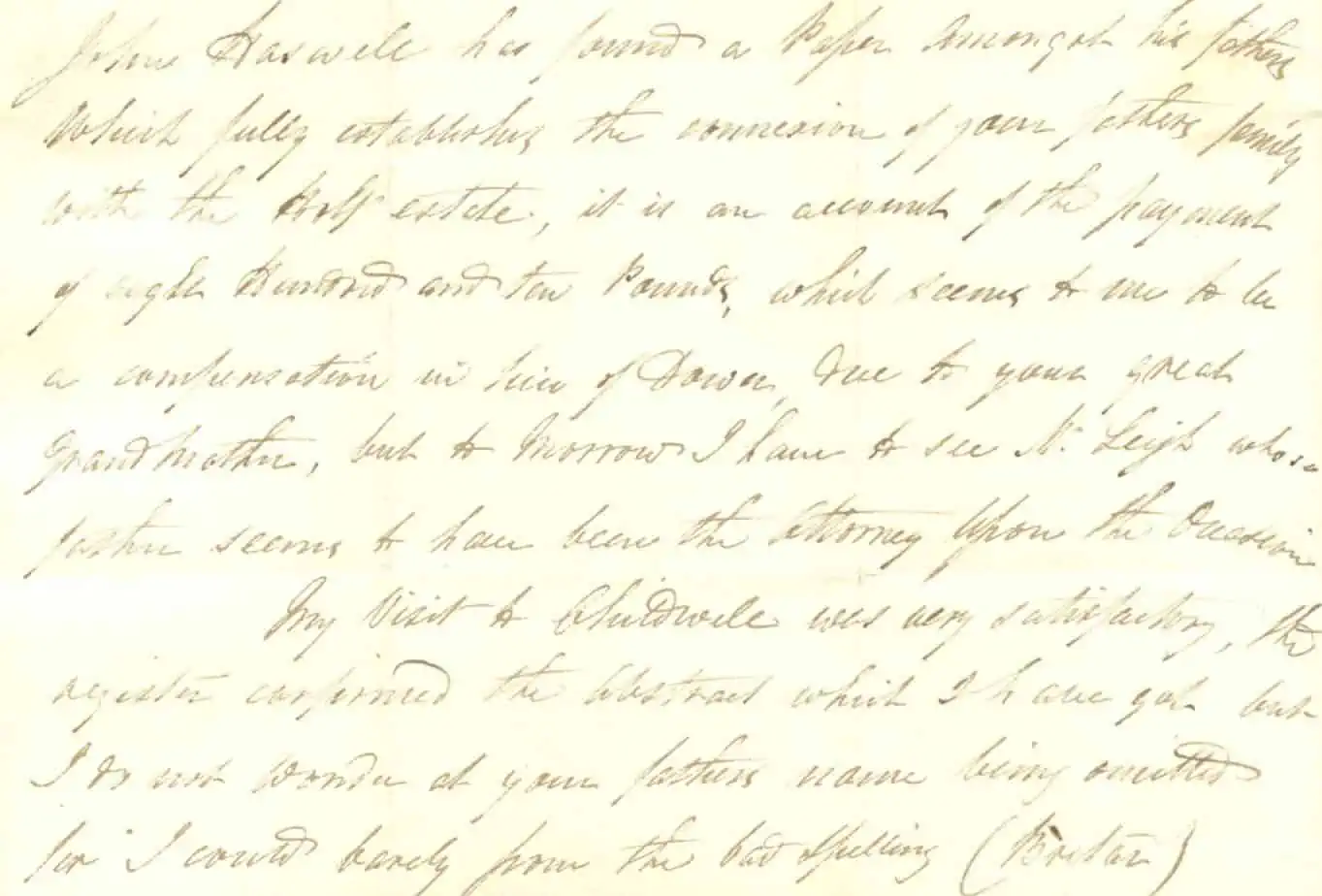
John Richards and John Haswell continued their investigation in Childwall, examining parish records and gravestones. Eventually, Haswell discovered a document among his father’s papers that confirmed the connection between Madge’s family and the Holt estate.
The document described a payment of £810, likely compensation in place of a dower owed to Madge’s great-grandmother. This evidence helped establish the family link.
John reported that the parish register supported his findings, though poor spelling in the records made the search difficult.
The Yeates Connection
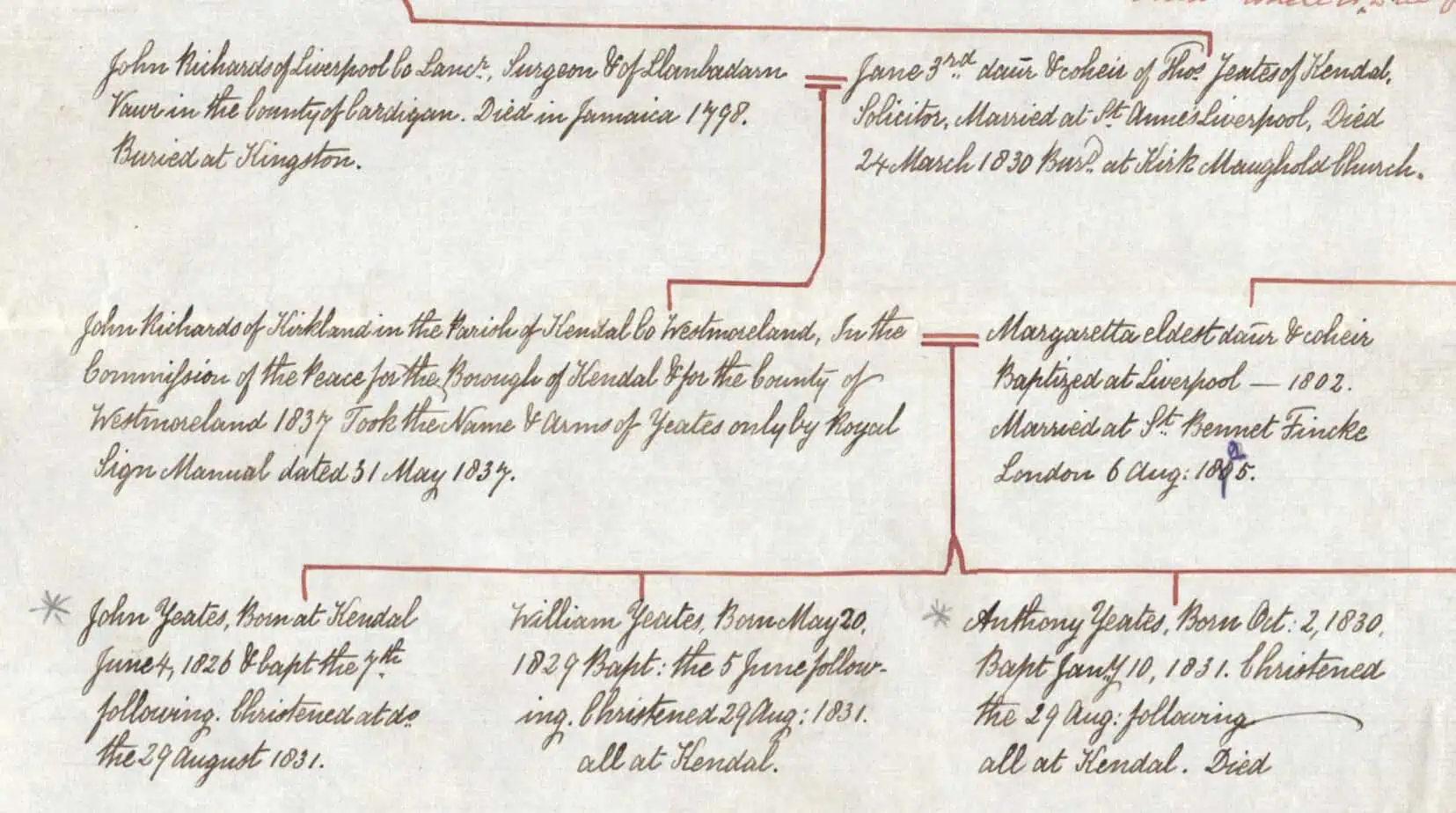
The pedigree describes John Richards as a man of standing: he served as a magistrate in Kendal and Westmorland and, in 1837, adopted the name and arms of Yeates by Royal Sign Manual.
The pedigree likely dates from between 1837 and 1841, although later annotations by the York Herald in 1865 suggest that the family revisited it—possibly to verify heraldic details for a stained-glass memorial in Kendal.
Earlier Family History
Family papers trace the Brettargh line back to James Brettargh (d. 1664), but other sources push the history much further.
A memorandum found among family papers suggests that earlier records—possibly tracing the family back to the time of King John—once existed in the Heralds’ Office.
Historical accounts show that the Brettargh family dates back to at least 1180, when land at Brettargh was granted to William de Suonis. By 1324, the estate passed to Avice, who, with her husband Roger the Walker, adopted the name de Brettargh.
Rise and Decline
By the late fifteenth century, records allow us to trace the family line clearly to modern times. Although never among the wealthiest families, the Brettarghs held a respected position in Lancashire society.
However, their fortunes declined in the seventeenth century. Nehemiah Brettargh and his son James spent extravagantly and managed their affairs poorly. Later generations added further debts.
James’s grandson sold valuable property at Aigburth, which the family had acquired through marriage in the sixteenth century. The family also broke the entail on Brettargh Holt and heavily mortgaged the estate.
Before his death in 1747, James Brettargh left the Holt—the last of the family to live there. By around 1790, creditors forced the estate into Chancery due to unpaid debts.
Original Documents
I based this article on the Yeates family documents and diaries, now held at the Kendal Record Office. These records remain available to the public for viewing and download.